Metabolic Flexibility: What It Means and Why It Matters for Long-Term Health
Metabolic flexibility describes how your body shifts between fuels. Here is what the concept can and cannot tell you about energy, exercise, and healthy ageing.
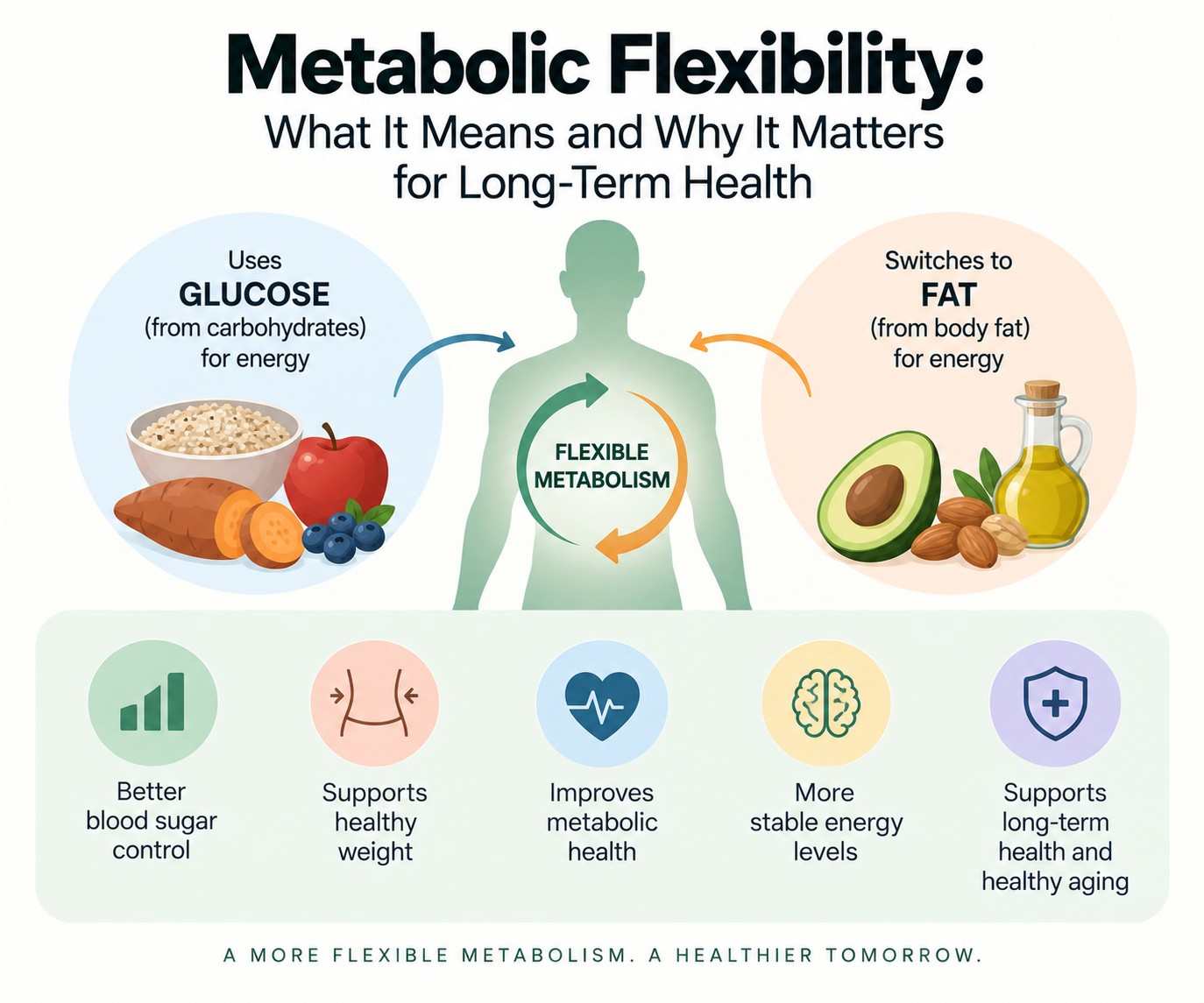
Metabolic flexibility describes the body's ability to switch efficiently between burning carbohydrate and burning fat for fuel, depending on what is available and what the body needs at a given moment. A metabolically flexible body shifts smoothly between these fuel sources; a metabolically inflexible one gets stuck relying heavily on carbohydrate, even during fasting or low-intensity activity when fat should be the dominant fuel source. This distinction, though less familiar than terms like blood sugar or cholesterol, has real implications for energy levels, weight management, and long-term metabolic disease risk.
How Fuel Switching Normally Works
After a carbohydrate-containing meal, insulin rises and the body preferentially burns glucose, while storing excess energy as glycogen or fat. Several hours later, as glucose and insulin fall, a metabolically healthy body shifts toward burning stored fat for fuel, a transition that happens automatically and without conscious effort in someone with good metabolic flexibility. This switching capacity is what allows stable energy levels between meals and during periods of fasting or moderate exercise.
What Metabolic Inflexibility Looks Like
In insulin resistance, this switching mechanism becomes impaired. The body struggles to access and burn stored fat efficiently, even when glucose is low, leading to a heavier reliance on frequent carbohydrate intake simply to maintain energy. This often shows up as strong hunger or irritability between meals, energy crashes a few hours after eating, difficulty going more than a few hours without food, and, for some people, a noticeable dependence on caffeine or sugar to get through the day.
Why Metabolic Flexibility Matters for Long-Term Health
Metabolic inflexibility is closely tied to insulin resistance, the same underlying process covered in our article on fasting insulin and HOMA-IR, and over time it contributes to weight gain, particularly visceral fat accumulation, elevated triglycerides, and increased risk of type 2 diabetes and cardiovascular disease. Restoring metabolic flexibility is not simply about comfort between meals; it reflects a genuine improvement in how efficiently the body's metabolic machinery is functioning.
Signs Your Metabolic Flexibility May Be Reduced
Common indicators include noticeable fatigue or brain fog a few hours after a carbohydrate-heavy meal, difficulty skipping or delaying a meal without significant hunger or irritability, weight that concentrates around the abdomen despite reasonable overall calorie intake, and a general sense of needing to eat frequently to avoid energy dips. None of these signs alone confirms metabolic inflexibility, but together with lab markers such as fasting insulin and HOMA-IR, they build a more complete picture.
How Metabolic Flexibility Is Actually Measured
In research settings, metabolic flexibility is measured using indirect calorimetry, tracking how efficiently the body shifts its fuel source in response to a meal or fasting state. This specialised testing is not widely available outside research or specialist metabolic clinics, which is why in everyday practice, metabolic flexibility is usually inferred from a combination of symptoms, fasting insulin, HOMA-IR, waist circumference, and how someone's energy and hunger respond to changes in meal timing and composition.
Building Metabolic Flexibility Through Diet
Reducing frequent snacking and very short intervals between meals gives the body more opportunity to practice shifting toward fat metabolism between eating periods. Prioritising protein, fibre, and healthy fats over highly refined carbohydrates reduces the sharp insulin spikes that can reinforce carbohydrate dependence. For many people, this does not require an extreme or highly restrictive diet, but rather a more deliberate structure around meal timing and composition than typical modern eating patterns encourage.
The Role of Exercise
Both aerobic exercise and resistance training improve metabolic flexibility, though through somewhat different mechanisms. Aerobic training improves the muscle's capacity to burn fat efficiently during lower-intensity effort, while resistance training builds muscle mass, which itself improves overall insulin sensitivity and glucose disposal, a connection explored further in our article on muscle as a longevity organ. A combination of both types of activity tends to produce the most meaningful improvement in metabolic flexibility over time.
Sleep and Stress Are Not Separate Issues
Poor sleep and chronic stress both raise cortisol and can independently impair insulin sensitivity, working against efforts to improve metabolic flexibility through diet and exercise alone. This connection is covered in more detail in our article on sleep and insulin resistance, and it is a genuinely important, frequently overlooked piece of the broader metabolic health picture.
A Realistic Timeline for Improvement
Meaningful improvement in metabolic flexibility typically takes weeks to a few months of consistent changes, rather than days. Early signs often include steadier energy between meals and reduced reliance on frequent snacking, well before more traditional markers like weight or lab values shift substantially. Tracking fasting insulin and HOMA-IR periodically alongside these subjective changes gives a more complete, objective view of progress.
Assess Your Metabolic Flexibility
Frequently Asked Questions (FAQs)
1. Is metabolic flexibility the same as being in ketosis?
No, metabolic flexibility refers to the ability to switch between fuel sources as needed, not a fixed state of primarily burning fat, which is what ketosis specifically describes.
2. Can intermittent fasting improve metabolic flexibility?
For many people it can, by giving the body more regular opportunity to shift toward fat metabolism, though it should be approached individually and is not necessary or appropriate for everyone.
3. Does metabolic flexibility decline with age?
It can, particularly alongside reduced muscle mass and activity levels, though this decline is significantly modifiable through consistent exercise and dietary habits.
4. Can someone with a normal weight still have poor metabolic flexibility?
Yes, metabolic flexibility is not reliably predicted by body weight alone, and can be reduced even in people who are not overweight.
5. Is frequent hunger between meals always a sign of poor metabolic flexibility?
Not always, but persistent, strong hunger shortly after eating, combined with other signs, is a reasonable prompt to discuss metabolic testing with a physician.
6. How long does it take to notice improved energy between meals?
Some people notice steadier energy within a few weeks of consistent dietary and activity changes, though full metabolic improvement generally takes longer.
7. Is there a specific test for metabolic flexibility available to patients?
Direct calorimetry testing is largely limited to research settings; in clinical practice, fasting insulin, HOMA-IR, and symptom patterns are used together to estimate metabolic flexibility.
This article is for educational purposes and does not replace personalized medical advice. Please consult a qualified physician before making changes to your treatment, medication, or health screening plan.