High-Protein Indian Vegetarian Diet: A Practical Guide
Build a high-protein Indian vegetarian diet from familiar foods. Learn meal ideas, common mistakes and when to seek individual nutrition advice.
If you eat vegetarian food in India, you have probably heard two opposite claims: that a normal dal-roti meal provides all the protein you need, and that you cannot meet your needs without a powder. Neither is universally true. A high-protein Indian vegetarian diet can be built from familiar foods, but it works best when you count what is actually on the plate rather than treating every legume or grain dish as a large protein serving.
This guide is about meal design, not a prescription for everyone to eat more protein. Requirements differ with age, body size, training, illness, pregnancy, and kidney health. If you have a medical condition, a physician or registered dietitian can help set an appropriate target. The practical question for most healthy adults is how to distribute varied protein foods across breakfast, lunch, snacks, and dinner without losing the fibre and variety that make a balanced vegetarian pattern useful.
What makes a vegetarian meal genuinely protein-rich?
A meal is protein-rich when a substantial part of it comes from foods that contribute meaningful protein, not simply because one ingredient is a lentil. A large serving of rice with a small spoon of dal may be filling, but the dal is unlikely to carry the entire meal. The same is true of a vegetable sandwich with a thin paneer layer or a bowl of upma with a few peanuts.
Look first at the main protein anchor. Common Indian options include dal in a useful portion, chana, rajma, soy foods, tofu, paneer, milk, curd, hung curd, and, for those who include eggs, eggs. Then add vegetables, whole grains, fruit, and fats for a complete meal. Milk products and soy can be particularly convenient when you need a relatively concentrated source. Pulses and beans offer protein together with fibre, but their cooked weight includes considerable water, so portion size matters.
The ICMR-National Institute of Nutrition dietary guidelines emphasize dietary variety and describe pulses as important protein sources in vegetarian diets. They also explain why a mix of cereals and pulses helps improve protein quality. You do not need to combine every amino acid at exactly the same moment. Aim for a varied pattern over the day.
How much protein should you aim for?
There is no one high-protein number that suits every adult. A person who is sedentary, an older adult trying to preserve muscle, someone doing resistance training, and a patient recovering from illness may need different plans. Start with an assessment of your usual intake rather than a supplement label or a social-media calculator. Record three ordinary days of food and compare the estimated protein with your needs, ideally with a dietitian when the goal is medical or performance-related.
Needs also change if you are losing weight. When energy intake falls, it can become harder to obtain enough protein and other nutrients from small portions. Regular strength training supports muscle retention, while protein alone does not replace exercise. Our guide to protein and strength training for healthy ageing covers the broader muscle-health question. This article focuses specifically on building Indian vegetarian meals.
Do not increase protein aggressively if you have chronic kidney disease, have been given a protein restriction, or are under treatment for another condition that affects diet. The right target may be lower or more closely monitored. If you are unsure whether your kidneys are healthy, discuss your medical history before making a major change.
A meal-by-meal approach using Indian foods
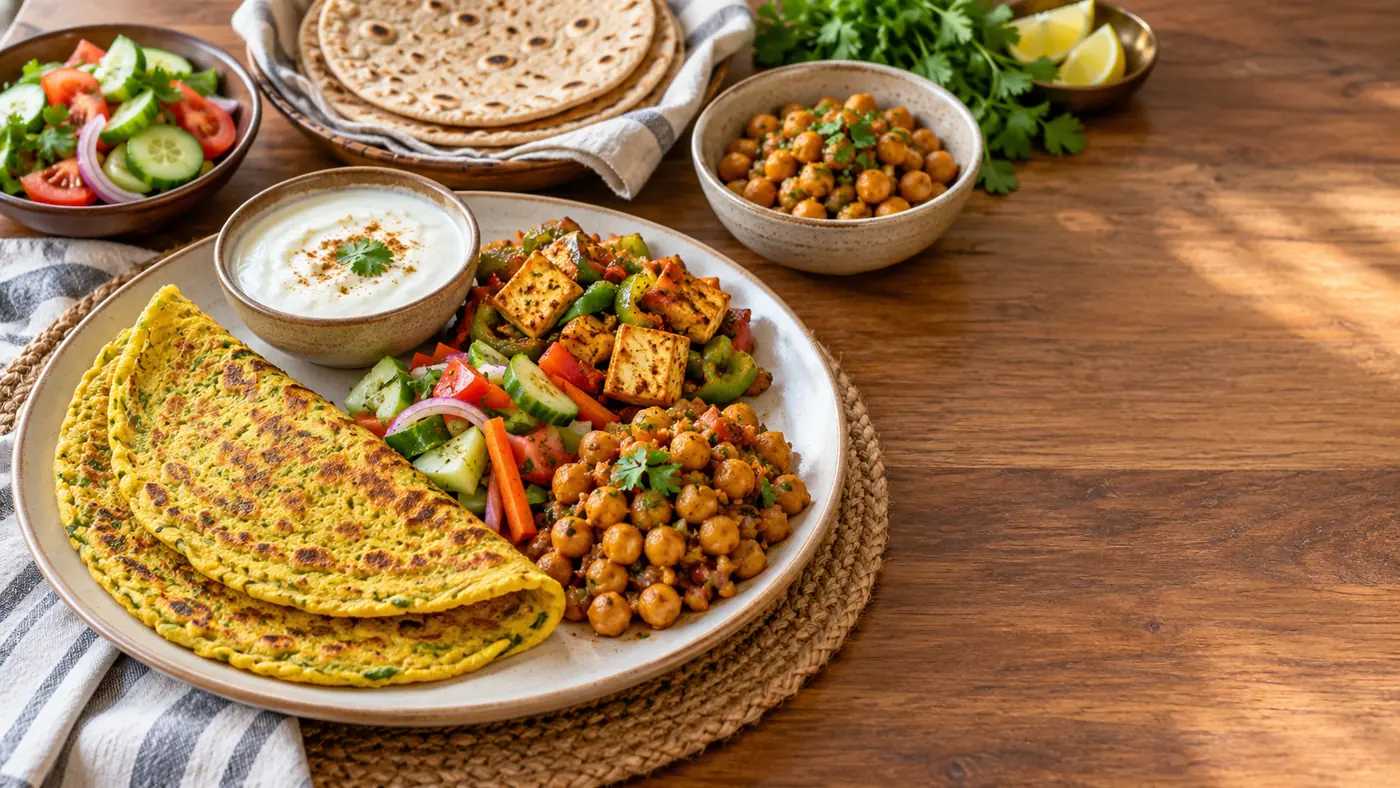
Breakfast is often the largest gap. Tea and toast, plain poha, or fruit alone may not provide much protein. Options that can work include moong dal chilla with curd, besan chilla with a paneer or tofu filling, Greek-style or hung curd with fruit and nuts, or a vegetable omelette if eggs fit your diet. If you prefer idli or dosa, pair it with a larger serving of sambar or another protein-rich side rather than assuming the batter does the whole job.
At lunch, make the protein component visible on the plate. A proper serving of dal, chole, rajma, or another pulse can sit alongside roti or rice and vegetables. Curd or a tofu or paneer dish may add more protein if your needs are higher. A grain-and-pulse combination is familiar and useful, but a plate dominated by rice or roti with very little pulse will not achieve the same result. Choose portions that also fit your appetite and energy needs.
For a snack, roasted chana, a milk or soy-milk drink, unsweetened curd, tofu, or a small paneer preparation can be more useful than biscuits or a sweet drink. Nuts and seeds contribute protein, but they also provide substantial fat and energy. They can enrich a meal without being the sole protein source. At dinner, repeat the same principle as lunch, perhaps using a different pulse, soy, or dairy option for variety.
An illustrative day could be moong chilla and curd for breakfast, rajma with rice and a vegetable for lunch, roasted chana with fruit as a snack, and tofu with roti and vegetables for dinner. This is a food-pattern example, not a fixed menu or proof that any particular person has met their target. Serving sizes, cooking methods, and nutritional needs vary.
Is paneer better than dal, or is soy better than both?
There is no single winner. Paneer and dairy provide concentrated protein and calcium but may bring more saturated fat depending on the product and portion. Dal and beans bring fibre and other nutrients, though the amount of protein per cooked serving varies. Soy foods such as tofu can make a useful alternative when someone does not consume dairy. The best pattern combines foods you can afford, tolerate, and enjoy.
Protein quality matters, but it should not become a reason to dismiss plant foods. A systematic review of randomized trials found some differences between plant and animal protein for muscle mass in pooled studies, but did not show a difference for muscle strength or physical performance. The evidence does not support the claim that vegetarian diets cannot support muscle. It does support paying attention to total intake, food selection, and training.
If you are vegan, rely on varied pulses, soy, grains, nuts, and seeds, and ask about nutrients such as vitamin B12 that may need particular attention. If you are lacto-vegetarian, milk, curd, and paneer provide additional choices. Food allergies, lactose intolerance, digestive symptoms, and personal preferences can all change the best plan.
Common mistakes that make a high-protein plan less effective
First, estimating by the name of the dish rather than the amount eaten. A small cup of thin dal is not equivalent to a larger serving of cooked lentils. Second, concentrating nearly all protein at dinner while breakfast and lunch remain low. Spreading protein-containing foods across meals makes the plan easier to follow and may help support muscle when combined with training.
Third, replacing a balanced diet with packaged high-protein foods. Powders and bars can be convenient in some circumstances, but they are not automatically necessary or superior to meals. Check ingredients and the actual protein per serving, especially if a product also carries substantial sugar. Fourth, using protein as a reason to ignore fruit, vegetables, whole grains, and overall energy intake. A good diet is more than one nutrient.
Finally, assuming that a high-protein diet will by itself produce fat loss. Weight change depends on the broader eating pattern, activity, sleep, medicines, and health conditions. Our article on waist-to-height ratio versus BMI explains why body size also tells only part of the metabolic-health story.
When should you get individual advice?
Ask for a personalized plan if you are older and losing strength, intentionally losing weight, training hard, pregnant, recovering from an illness, or managing diabetes or kidney disease. A dietitian can calculate a target, identify food gaps, and adapt the plan to your usual meals. If you have unexplained weight loss, fatigue, or a major change in appetite, investigate the cause rather than treating protein intake as the only issue.
iMedi's approach is to connect nutrition decisions to the person's wider health picture rather than applying the same menu to everyone. If you want a physician-led assessment of your metabolic and muscle-health goals, contact iMedi. You can also read our guide to metabolic biomarkers beyond HbA1c to see why diet advice may depend on more than a weight measurement.
Frequently asked questions
Can an Indian vegetarian diet provide enough protein without powder?
Yes, many people can meet their needs through food when they plan portions and include several protein sources across the day. A powder may be useful in selected situations, but it is not a requirement for all vegetarians.
Is dal and rice a complete protein meal?
The combination supplies complementary amino acids and can be part of a balanced meal. Whether it provides enough total protein depends on the portions of dal and rice and your individual needs. Do not judge the meal by the combination alone.
Are paneer and tofu interchangeable?
Both can be useful protein anchors, but they differ in fat, calcium, preparation, and portion size. Check the product label and use the option that fits your dietary preferences and overall health plan.
Do vegetarians need to eat protein immediately after exercise?
The more important first step is meeting an appropriate total intake with a sustainable meal pattern. Timing can matter for some athletes, but there is no need for every recreational exerciser to consume a shake the moment a workout ends.
Can too much protein harm the kidneys?
People with kidney disease may need a specific protein plan. For someone with healthy kidneys, the appropriate amount depends on their overall health and goals. Do not use an extreme target without discussing it if you have kidney concerns or abnormal tests.
Which vegetarian breakfast is highest in protein?
There is no universal winner because recipes and portions vary. Moong or besan chilla with curd, tofu or paneer fillings, and protein-rich curd bowls are practical starting points. Compare the actual serving rather than relying on a dish name.
Sources
- ICMR-NIN: Dietary Guidelines for Indians 2024
- PubMed: Plant versus animal protein and muscle outcomes, systematic review
This is educational information, not an individualized nutrition prescription. Discuss major dietary changes with a qualified professional if you have a medical condition.