Protein, Strength Training, and Healthy Ageing: A Practical Guide
Healthy ageing needs more than a supplement or a workout. Learn how protein, strength training, recovery, and clinical context work together.
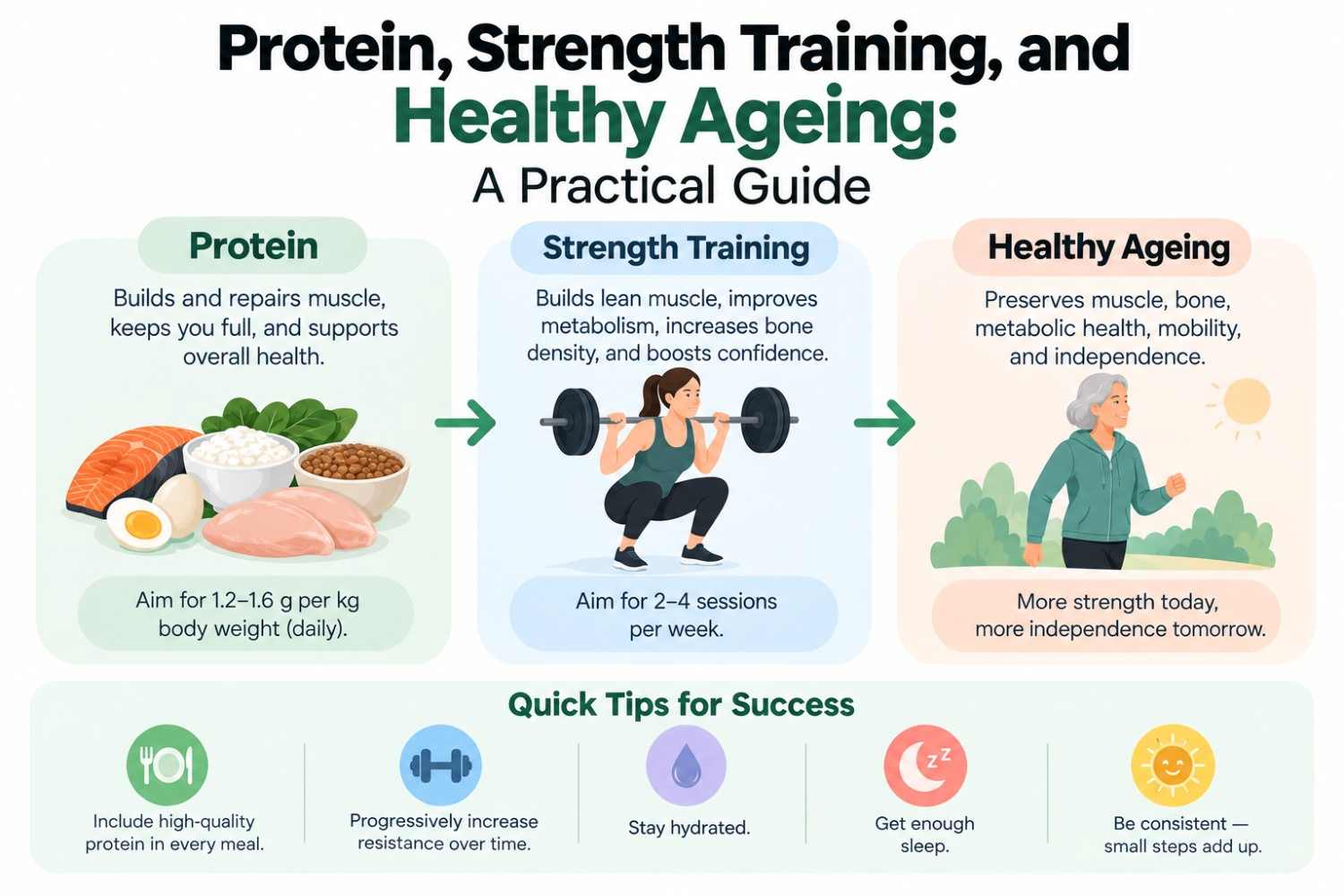
Protein needs and the value of strength training both change with age, yet most general nutrition advice is not adjusted for older adults specifically, leaving many people under-fuelling the exact muscle-building process that matters most for maintaining independence and metabolic health later in life. Understanding how protein and resistance training work together, and how requirements shift with age, makes it considerably easier to build a plan that actually protects long-term function.
Why Protein Needs Increase With Age
Older adults experience a phenomenon sometimes called anabolic resistance, meaning a given amount of protein produces a smaller muscle-building response compared to a younger adult eating the same amount. To compensate, general protein recommendations for older adults are typically higher than standard adult guidelines, often in the range of 1.0 to 1.2 grams per kilogram of body weight daily for healthy older adults, and higher still, up to 1.2 to 1.6 grams per kilogram, for those actively engaged in resistance training or recovering from illness or surgery.
Why Protein Alone Is Not Enough
Protein provides the building blocks for muscle repair and growth, but without a stimulus to use them, primarily resistance training, much of that extra protein simply is not directed toward building muscle. This is why protein intake and resistance training are best thought of as a paired strategy rather than two independent interventions; each significantly enhances the effectiveness of the other, a relationship explored further in our related article on muscle as a longevity organ.
Distributing Protein Across the Day
Research suggests that spreading protein intake across three to four meals, rather than concentrating most of it in a single meal, produces a better muscle-building response, since the body can only effectively use a limited amount of protein for muscle synthesis at any one time. For many people, this means deliberately increasing protein at breakfast and lunch, meals that are often lower in protein than dinner in typical eating patterns.
Practical Protein Sources
Eggs, dairy, poultry, fish, legumes, tofu, and paneer are all practical, accessible protein sources that fit into most dietary patterns, including vegetarian diets common across India. For vegetarians specifically, combining plant protein sources such as lentils, chickpeas, and dairy across the day, rather than relying on a single source, helps meet the higher total protein target more comfortably.
How Much Resistance Training Is Needed
Two to three sessions per week targeting major muscle groups, legs, back, chest, shoulders, and core, is generally sufficient to produce meaningful strength gains when combined with adequate protein intake. Progression matters more than intensity in any single session; gradually increasing resistance, repetitions, or difficulty over weeks and months is what drives lasting improvement, not occasional, maximal effort.
Starting Resistance Training Later in Life
It is genuinely never too late to begin. Studies involving adults starting structured resistance training for the first time in their seventies and beyond have shown measurable improvements in strength and muscle mass within months. Starting with body-weight exercises, resistance bands, or light weights, under guidance from a physiotherapist or trainer familiar with older adults, is a safe and effective way to begin.
Timing Protein Around Exercise
Consuming a source of protein within a few hours of a resistance training session can support the muscle repair process, though total daily protein intake matters more than precise timing for most people. A practical approach is simply ensuring a protein-containing meal or snack is not skipped around a workout, rather than following an overly rigid timing window.
Common Mistakes That Undermine Progress
Under-eating protein while focusing only on calorie reduction during weight loss can accelerate muscle loss rather than protecting it. Similarly, relying on cardio exercise alone without any resistance training misses the specific stimulus muscle needs to grow and strengthen. Combining a calorie deficit, when weight loss is the goal, with adequate protein and consistent resistance training helps ensure that weight lost comes disproportionately from fat rather than muscle.
Tracking Progress the Right Way
Strength (how much weight can be lifted, how many repetitions completed) and, where available, body composition give a far more meaningful picture of progress than body weight alone, since the goal is building and preserving muscle, not simply losing weight. This mirrors the broader theme covered in our article on biomarkers beyond HbA1c: the most useful metrics are often not the default ones.
Build a Protein and Strength Training Plan
Frequently Asked Questions (FAQs)
1. How much protein does a healthy older adult need daily?
Generally 1.0 to 1.2 grams per kilogram of body weight, higher for those actively resistance training or recovering from illness, though individual needs should be discussed with a physician or dietitian.
2. Can vegetarians meet these higher protein targets?
Yes, by combining protein sources such as lentils, dairy, tofu, and paneer across meals, vegetarians can meet elevated protein targets, though it often requires more deliberate planning than an omnivorous diet.
3. Is it necessary to eat protein immediately after exercise?
Not strictly; while timing can offer a modest benefit, total daily protein intake matters considerably more than precise post-workout timing for most people.
4. Can resistance training be done safely with joint problems?
Often yes, with appropriate modifications; a physiotherapist can help design a programme that works around specific joint limitations safely.
5. How quickly will I see strength improvements after starting?
Many people notice measurable strength gains within eight to twelve weeks of consistent training, with continued improvement over months of ongoing effort.
6. Does high protein intake harm the kidneys in healthy adults?
In people with normal kidney function, higher protein intake within the ranges discussed here is not generally associated with kidney harm, though those with existing kidney disease should discuss protein targets with their physician.
7. Is walking a substitute for resistance training for muscle health?
No, walking supports cardiovascular health but does not provide the resistance stimulus needed to build or preserve significant muscle mass.
This article is for educational purposes and does not replace personalized medical advice. Please consult a qualified physician before making changes to your treatment, medication, or health screening plan.