The Metabolic Health Checkup: Which Biomarkers Matter Beyond HbA1c
HbA1c is important, but it cannot capture every aspect of metabolic health. Here is a practical framework for discussing biomarkers with your clinician.
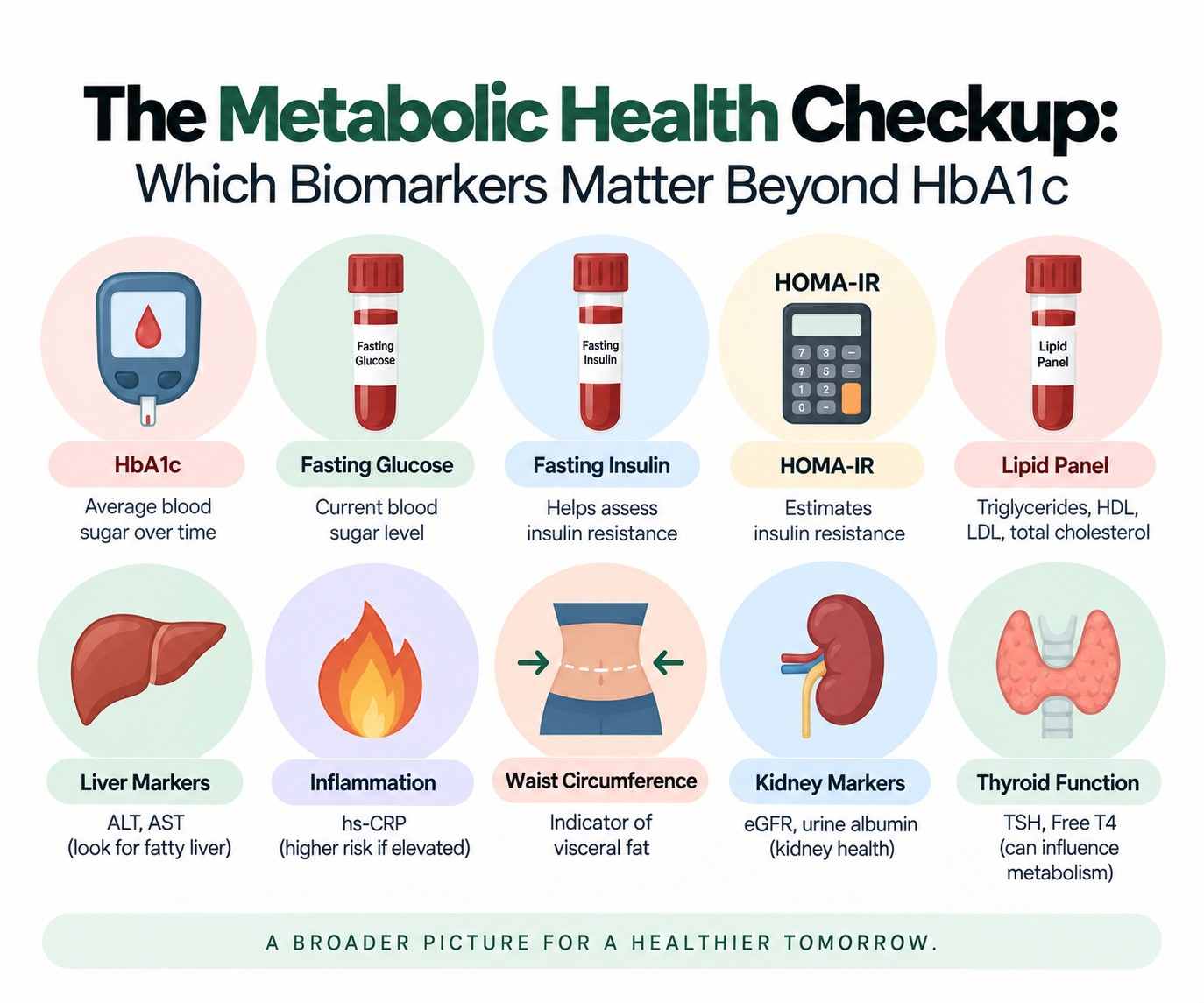
HbA1c has become the default single number many people associate with metabolic health, largely because it is the standard test used to diagnose diabetes and prediabetes. It is a genuinely useful marker, but relying on it alone gives an incomplete, and sometimes misleadingly reassuring, picture of overall metabolic health. A more complete checkup includes several additional markers that can reveal early dysfunction well before HbA1c itself becomes abnormal.
Why HbA1c Alone Is Not Enough
HbA1c reflects average blood glucose over roughly the preceding three months, but it says nothing about how much insulin the body is producing to maintain that average, nor about fat distribution, inflammation, or lipid particle patterns that independently predict cardiometabolic risk. A person can have a completely normal HbA1c while already showing significant insulin resistance, elevated inflammation, or an atherogenic lipid pattern, all of which carry real long-term risk that HbA1c alone will not reveal.
Fasting Insulin and HOMA-IR
As covered in more detail in our article on fasting insulin and HOMA-IR, these markers can reveal insulin resistance years before glucose itself becomes abnormal, since the pancreas typically compensates by producing more insulin long before glucose control visibly deteriorates. This makes fasting insulin one of the single most valuable additions to a standard metabolic panel.
A Full Lipid Panel, Including Triglyceride-to-HDL Ratio
Beyond standard LDL and HDL cholesterol, triglyceride levels and the ratio between triglycerides and HDL provide additional insight into insulin resistance and cardiovascular risk. A high triglyceride-to-HDL ratio is commonly associated with insulin resistance and a more atherogenic lipid particle pattern, even when standard LDL cholesterol appears unremarkable on its own.
High-Sensitivity CRP (hs-CRP)
hs-CRP measures low-grade systemic inflammation, which plays a direct role in the development of insulin resistance, fatty liver disease, and atherosclerosis. Elevated hs-CRP in someone with otherwise unremarkable standard results can indicate an inflammatory process worth investigating further, and tracking it over time can help assess whether lifestyle interventions are having a meaningful anti-inflammatory effect.
Waist Circumference and Body Composition
BMI alone cannot distinguish between muscle and fat, nor identify where fat is distributed. Waist circumference, and where available, a body composition assessment, gives a much better indication of visceral fat, the metabolically active fat surrounding internal organs that is more strongly linked to insulin resistance and cardiovascular risk than overall body weight alone.
Liver Enzymes and Fatty Liver Screening
Non-alcoholic fatty liver disease is closely linked to insulin resistance and is frequently present without symptoms. Liver enzymes (ALT and AST), and where indicated, liver imaging, can identify early fatty liver changes that a standard metabolic panel focused only on glucose would miss entirely.
Blood Pressure as a Metabolic Marker
Blood pressure is often assessed separately from metabolic health, but elevated blood pressure frequently travels alongside insulin resistance as part of the broader metabolic syndrome picture. Reviewing blood pressure trends alongside the markers above gives a more complete cardiometabolic risk assessment than any single measurement in isolation.
Vitamin D and Thyroid Function
While not classic metabolic markers, vitamin D deficiency and thyroid dysfunction can both influence energy, weight, and metabolic function, and are common enough to warrant inclusion in a thorough checkup, particularly when fatigue or unexplained weight changes are part of the clinical picture.
Bringing the Full Picture Together
No single marker above tells the complete story on its own. A physician reviewing fasting insulin, HOMA-IR, a full lipid panel, hs-CRP, waist circumference, liver enzymes, and blood pressure together can identify patterns, and catch early dysfunction, that reviewing HbA1c in isolation would miss. This comprehensive approach connects directly to the practical steps covered in our related articles on muscle and glucose control and sleep and insulin resistance, since a complete checkup is only useful if it leads to a concrete, individualised action plan.
How Often to Repeat a Full Metabolic Checkup
For most healthy adults without existing risk factors, a comprehensive metabolic checkup annually is a reasonable interval. For those actively working on insulin resistance or with known risk factors, more frequent testing, every three to six months for key markers like fasting insulin and HOMA-IR, can help track whether lifestyle interventions are producing measurable improvement.
Book a Comprehensive Metabolic Checkup
Frequently Asked Questions (FAQs)
1. Is HbA1c still worth testing if I get the other markers?
Yes, HbA1c remains a useful marker for average glucose control and is still part of a comprehensive metabolic checkup, just not sufficient on its own.
2. How often should hs-CRP be tested?
Annually is reasonable for general screening, with more frequent testing for those actively addressing elevated inflammation as part of a treatment plan.
3. Can waist circumference reveal risk that BMI misses?
Yes, someone with a normal BMI can still have an elevated waist circumference and associated metabolic risk, which BMI alone would not reveal.
4. Is fasting required for all of these tests?
Fasting insulin, glucose, and lipid panels typically require fasting, while hs-CRP, thyroid function, and vitamin D generally do not, though your physician will confirm requirements for your specific panel.
5. Can fatty liver disease be present without any symptoms?
Yes, fatty liver disease is frequently asymptomatic in its earlier stages, which is why liver enzyme testing and imaging are valuable even without noticeable symptoms.
6. Should young, apparently healthy adults get this full panel?
It can be worthwhile, particularly with a family history of metabolic disease, since early detection allows for earlier, more effective intervention.
7. Which single additional test provides the most useful extra information?
Fasting insulin is often considered the single most valuable addition, since it can reveal insulin resistance years before HbA1c or fasting glucose become abnormal.
This article is for educational purposes and does not replace personalized medical advice. Please consult a qualified physician before making changes to your treatment, medication, or health screening plan.