How to Measure Blood Pressure at Home
One high blood pressure reading can make anyone anxious. One normal reading can also offer false reassurance if the cuff or technique is wrong. Home measurement is useful because it shows a pattern across ordinary days,
One high blood pressure reading can make anyone anxious. One normal reading can also offer false reassurance if the cuff or technique is wrong. Home measurement is useful because it shows a pattern across ordinary days, away from the stress and time limits of an appointment. The value of that pattern depends on using a validated monitor, the right cuff and a repeatable method. This guide explains how to collect readings that your clinician can interpret.
Choose a monitor that fits
An automatic upper-arm monitor is generally the most practical choice for most adults. Look for a device validated for accuracy and a cuff that fits the circumference of your upper arm. The American Heart Association recommends bringing the monitor to an appointment so a healthcare professional can check its use and compare readings. A cuff that is too small may give an artificially high number. Wrist devices can be harder to position consistently and are usually considered when a suitable upper-arm cuff is not possible.
Measure your arm before buying a cuff, especially if a standard size is unlikely to fit. Use the manufacturer's instructions for cuff placement and maintenance. Replace batteries when needed and protect the monitor from damage. If a device gives inconsistent or surprising results, do not immediately assume your blood pressure is changing wildly. Check the cuff, posture and device with a clinician first. A smartwatch estimate is not a substitute for a validated arm-cuff measurement.
Prepare before you press start
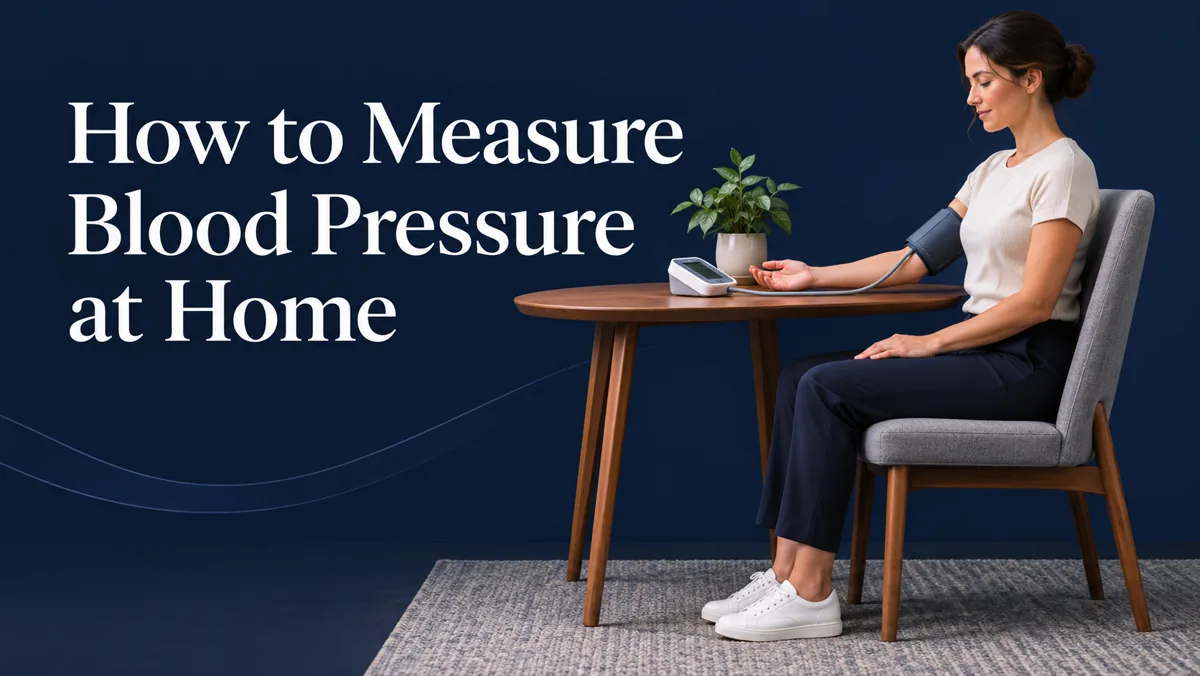
Avoid exercise, nicotine and caffeine for at least 30 minutes before a planned reading. Empty your bladder if needed. Sit quietly for at least five minutes in a chair with your back supported and both feet flat on the floor. Keep your legs uncrossed. Put the cuff on bare skin rather than over a sleeve, and rest the cuffed arm on a table so its middle is roughly level with your heart. Do not speak, scroll your phone or watch something stressful while the cuff inflates.
These details may sound fussy, but they reduce avoidable variation. Sitting on a bed with feet dangling, holding the arm unsupported, or talking can change the result. If you have just climbed stairs or rushed home, rest before measuring. Choose a time you can repeat. If your clinician gives you a different protocol because of a particular condition, follow that plan. A log is useful only if the measurements are comparable.
How many readings should you take?
For a planned monitoring period, clinicians commonly ask for two readings about one minute apart in the morning and again in the evening over several days. The exact number of days and whether the first day is excluded from the average depend on the clinical protocol. Write down each reading rather than reporting only the lowest one. Include the date, time and any relevant note, such as illness, pain or a missed dose. Many monitors store readings, but a simple notebook works too.
Avoid measuring repeatedly every few minutes because a single result worries you. Recheck after resting and using proper technique, then follow the advice you were given about high readings. The goal is a representative pattern, not a perfect number on every attempt. If you feel unwell, the presence or absence of a high reading does not replace medical evaluation. Blood pressure is one part of the clinical picture.
What do the numbers mean?
The top number is systolic pressure, recorded when the heart contracts. The bottom number is diastolic pressure, recorded between beats. Interpretation depends on age, health conditions, treatment and the guideline your clinician uses. Home readings are often interpreted using different thresholds from office readings. Do not diagnose hypertension or change medicine based on one number found online. Bring the series to a clinician who can consider the average and your overall cardiovascular risk.
Our article on how to lower blood pressure naturally discusses habits that may support a treatment plan. This article has a narrower job: making the measurements reliable. If you have a family history of heart disease, share that history when your blood pressure pattern is reviewed. Risk assessment may also consider cholesterol, diabetes, kidney health, smoking and other factors.
When does a reading need urgent attention?
If a reading is much higher than your usual values, rest and repeat it using correct technique, then follow your clinician's instructions. Seek emergency care for concerning symptoms such as chest pain, severe breathlessness, weakness on one side, difficulty speaking, a severe new headache, or other signs of acute illness. Do not delay emergency care because a second reading is lower. Pregnancy requires a separate assessment pathway, and concerning blood pressure or symptoms during pregnancy should be discussed urgently with the maternity team.
Never adjust or skip prescribed medication because you obtained a normal reading at home. Treatment is often the reason it is normal. Likewise, a high reading after missed medication, pain or stress is information to report, not a reason to double a dose unless you have been specifically instructed. If the monitor repeatedly shows values that conflict with how you feel or with clinic readings, ask about technique, cuff fit and whether ambulatory monitoring would clarify the pattern.
How to make the log useful at a consultation
Bring the monitor, cuff, written readings and medicine list. Mention what time you took medication relative to the readings. If you work shifts or have irregular sleep, note that too. The clinician may look for a steady pattern, differences between morning and evening, or a gap between home and office readings. White-coat effects and masked hypertension can occur, so the comparison matters. An individual plan may include continued home monitoring, a 24-hour monitor or a treatment review.
Home monitoring is part of preventive care, not a contest to achieve a particular value each morning. Our metabolic health checkup guide explains how blood pressure fits with other risk markers. Reliable measurements make every later decision more useful, whether the clinician recommends lifestyle changes, medicine or simply continued observation.
Frequently asked questions
Which arm should I use?
At an initial assessment, a clinician may check both arms and advise which to use routinely. Use the same arm for your home series unless you are told otherwise. The cuff must fit that arm correctly.
Should I measure after taking blood pressure medicine?
Follow the timing given by your clinician. For some monitoring plans, a morning reading before medication and food is useful. Record the time and do not alter doses to influence the result.
Is one high reading a diagnosis?
Usually not. Technique, stress and ordinary variation matter. Repeated correctly taken readings and clinical review are more informative than a single result.
Can I use a wrist monitor?
Sometimes, but positioning is more difficult and upper-arm devices are generally preferred. Ask a clinician whether a wrist device is suitable and how to check its accuracy.
Why is my home reading different from the clinic reading?
Environment, timing, cuff size and technique may differ. A consistent series can help identify a real difference. Bring your device to an appointment so its use can be checked.
Source: American Heart Association home blood pressure monitoring.
This article is educational and does not replace individual medical advice. Learn about preventive assessment through iMedi Health.