How to Lower Blood Pressure Naturally: 8 Habits
Practical, evidence-based habits for lowering blood pressure safely, from salt and food to exercise, sleep and home monitoring.
High blood pressure often causes no obvious symptoms. Many people discover it during a routine check, then ask whether they can bring it down without medication. The honest answer is that everyday habits can make a meaningful difference, but the right plan depends on your readings and overall risk. Some people need medicines alongside lifestyle changes. A single home reading is not enough to decide either way.
If you are wondering how to lower blood pressure naturally, start with accurate measurements and a repeatable routine rather than a quick fix. This guide explains eight habits with the strongest practical rationale, how to adapt them to an Indian diet and working day, and when a medical review should not wait.
First, make sure the number is real
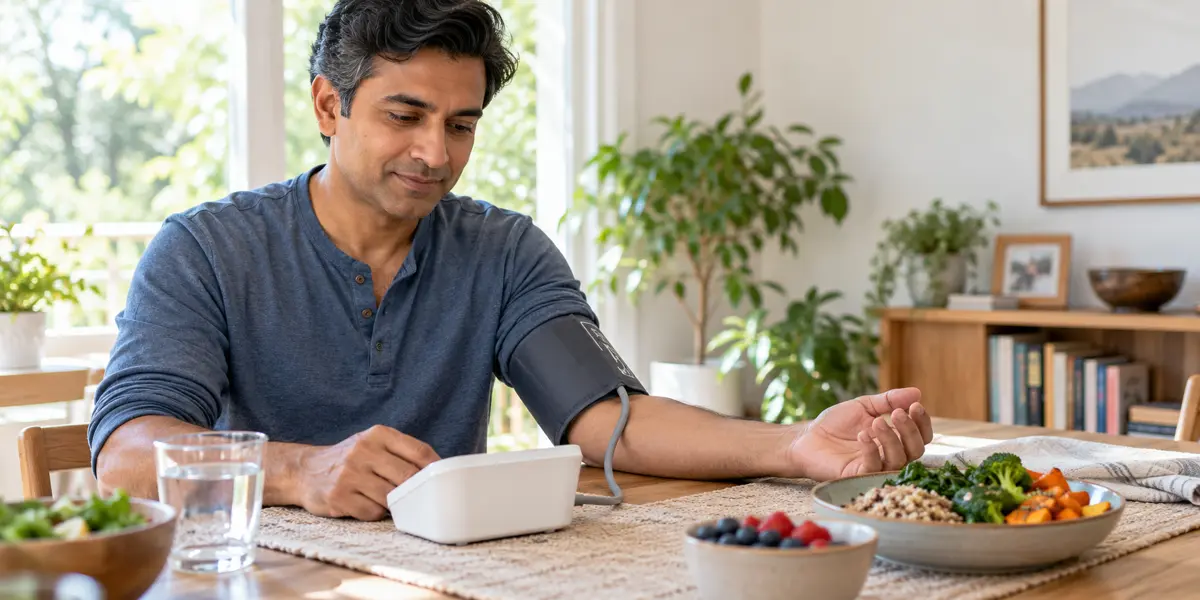
Blood pressure changes throughout the day. Stress, recent exercise, caffeine, a full bladder, talking during measurement, and a cuff that does not fit can all alter a reading. The American Heart Association's home-monitoring guidance recommends a validated upper-arm monitor, five minutes of quiet rest, and avoiding smoking, caffeine, or exercise for 30 minutes beforehand. Sit with your back supported, feet flat, and arm supported at heart level.
Record readings as your clinician advises, ideally at similar times, and take the monitor to an appointment so its technique and accuracy can be checked. Do not change or stop a prescribed tablet because one reading looks better. A pattern over time tells a more useful story than one number after a stressful commute.
1. Reduce sodium without making meals joyless
Salt is an important source of sodium, but most sodium may come from foods you did not salt at the table. Packaged snacks, instant noodles, pickles, papad, sauces, bakery items, restaurant gravies, and processed meats can add up quickly. Start by tasting food before adding salt and checking labels on foods you buy often. Cooking more meals at home can make the biggest difference because you control the ingredients.
Use lemon, herbs, roasted spices, garlic, ginger, and other flavourings to keep meals satisfying. Avoid assuming that a specialty salt is automatically low in sodium. Potassium-based salt substitutes also are not safe for everyone, particularly people with kidney disease or those taking medicines that raise potassium. Ask your clinician before using them.
2. Build a DASH-style plate with familiar foods
The NIH DASH eating plan emphasises vegetables, fruit, whole grains, beans, nuts, and lower-fat protein choices while limiting excess sodium, saturated fat, and sugary drinks. You do not need imported foods or a rigid menu to follow its broad pattern.
An Indian plate could include dal or chana, a generous serving of seasonal vegetables, a sensible portion of whole-grain roti or rice, curd if suitable, and fruit instead of a sweet drink. Choose unsalted nuts more often than fried namkeen. If you eat out frequently, ask for less added salt where practical and balance rich meals with simpler meals at home. The aim is a durable eating pattern, not a three-day detox.
3. Move regularly, then add strength work
Brisk walking, cycling, swimming, dancing, or other activity you enjoy can support blood pressure and cardiovascular health. Start at a level that is comfortable and build gradually. A ten-minute walk after a meal is easier to repeat than an ambitious plan that disappears after a week. Strength training matters as well because it helps preserve muscle and supports metabolic health as you age.
If you have chest pain, severe breathlessness, dizziness, or a known heart condition, speak with a clinician before increasing exercise. Movement does not have to be intense to count. The best plan is the one you can sustain safely, alongside less sitting during the workday.
4. Address weight and waist size without crash dieting
For people carrying excess body fat, gradual weight reduction can improve blood pressure. That does not mean everyone with a higher reading needs to pursue a particular number on the scale. Waist size, muscle mass, sleep, medication, family history, and other conditions affect the picture. Crash diets may be hard to maintain and can sacrifice muscle.
If weight is part of your health plan, focus on sufficient protein, vegetables, regular activity, and changes you can repeat over months. Our guide to waist-to-height ratio versus BMI explains why a tape measure can add context that weight alone misses. A clinician can help interpret these measures without reducing your health to a single target.
5. Protect sleep and ask about sleep apnea
Short or disrupted sleep can make healthy routines harder and may contribute to higher blood pressure. Keep a reasonably consistent sleep and wake time, limit late caffeine if it affects you, and make the bedroom quiet and dark. Persistent loud snoring, witnessed pauses in breathing, waking with headaches, or marked daytime sleepiness deserve assessment for possible sleep apnea.
Sleep hygiene is useful, but it is not a substitute for treating a sleep disorder. If you are already being treated for hypertension and readings remain high despite good habits, discussing sleep may reveal an overlooked factor. Our article on sleep and insulin resistance explores the broader metabolic connection.
6. Limit alcohol and avoid tobacco
Alcohol can raise blood pressure, add calories, and interfere with sleep. If you drink, reducing the amount or choosing not to drink is generally safer than looking for a supposedly heart-protective dose. Tobacco use damages blood vessels and increases cardiovascular risk even if a home pressure reading does not change immediately after quitting.
Quitting smoking often takes support and several attempts. Ask about evidence-based cessation help rather than relying only on willpower. This is one of the clearest ways to reduce overall heart risk, even though blood pressure is only one part of that risk.
7. Make stress management practical
Stress can temporarily raise a reading and can push sleep, eating, activity, and alcohol habits in the wrong direction. Slow breathing, short walks, time away from a screen, or a consistent relaxation practice may help you respond more calmly. These steps should complement medical assessment, not become a way to dismiss persistently high readings as "just stress."
Try one practical change you can control: a five-minute break before the evening commute, a walk after lunch, or a regular bedtime. Track whether the habit actually happens. A small repeatable practice is more useful than a complicated routine that is difficult to maintain.
8. Review medicines and other causes with a clinician
Some over-the-counter medicines, supplements, and prescribed treatments can affect blood pressure. Kidney disease, sleep apnea, and endocrine conditions can also matter. Bring a complete list of medicines and supplements to your appointment. Do not stop a medicine on your own to see whether the pressure improves.
A clinician may review repeated readings, cardiovascular risk, kidney function, blood glucose, and cholesterol before deciding on a plan. Our article on metabolic syndrome explains why blood pressure is often evaluated alongside waist size, glucose, and lipids rather than in isolation.
When should you seek urgent help?
If a reading is unexpectedly high, sit quietly and repeat it as your care team has advised. If it remains very high, contact a medical professional promptly. A reading above 180/120 mm Hg together with chest pain, severe breathlessness, weakness, trouble speaking, vision change, or other alarming symptoms is an emergency. Seek immediate emergency care rather than waiting for a lifestyle remedy to work. Pregnancy also requires prompt medical advice for high readings or concerning symptoms.
A realistic starting plan
Choose two changes for the next few weeks: measure blood pressure correctly and replace one high-salt food you eat most days, for example. Add a regular walk, then review your readings with a clinician. A plan is working when you can sustain it and your health professional can assess the trend. A lower reading is encouraging, but it is not a reason to stop prescribed treatment without review.
For a wider assessment of cardiovascular and metabolic risk, explore which biomarkers matter beyond HbA1c. You can also contact the iMedi team to discuss an appropriate assessment. iMedi provides physician-led health programmes and does not replace emergency services.
Frequently asked questions
Can I lower blood pressure naturally without medicine?
Some people can improve their readings with sustainable lifestyle changes. Others need medication as well, particularly when readings or cardiovascular risk are high. Only a clinician who knows your history can advise whether a medicine is needed.
How long do lifestyle changes take to affect blood pressure?
The timing varies. Consistent changes to diet, activity, sleep, and weight may improve readings over weeks to months. Use a home log and agree a review date with your clinician rather than judging the effect after one day.
Is garlic or lemon water enough to treat high blood pressure?
No single food or drink replaces a full care plan. Garlic and lemon can help flavour lower-salt meals, but they should not be treated as a cure or a replacement for prescribed medication.
Should I check blood pressure every hour?
Usually not. Very frequent checking can increase anxiety and makes it harder to see a meaningful pattern. Follow the schedule your clinician recommends and record readings taken with proper technique.
Can I exercise if my blood pressure is high?
Many people benefit from regular movement, but the safe starting level depends on your readings, symptoms, and medical history. Seek personalised advice before vigorous activity if your blood pressure is very high or you have heart symptoms.
Does a normal BMI mean my blood pressure risk is low?
No. Family history, age, sleep apnea, sodium intake, waist size, diabetes, kidney disease, and other factors can affect risk at any BMI. A normal BMI is not a substitute for measuring blood pressure.
Sources and medical note
This article draws on the American Heart Association's home blood pressure guidance and the NIH DASH eating plan. It is general education, not a diagnosis or a personalised treatment plan. Please seek qualified medical advice before changing medicines or exercise if you have an existing condition.