Visceral Fat vs Subcutaneous Fat
Understand visceral and subcutaneous fat, how each relates to metabolic risk, how they are measured, and what helps.
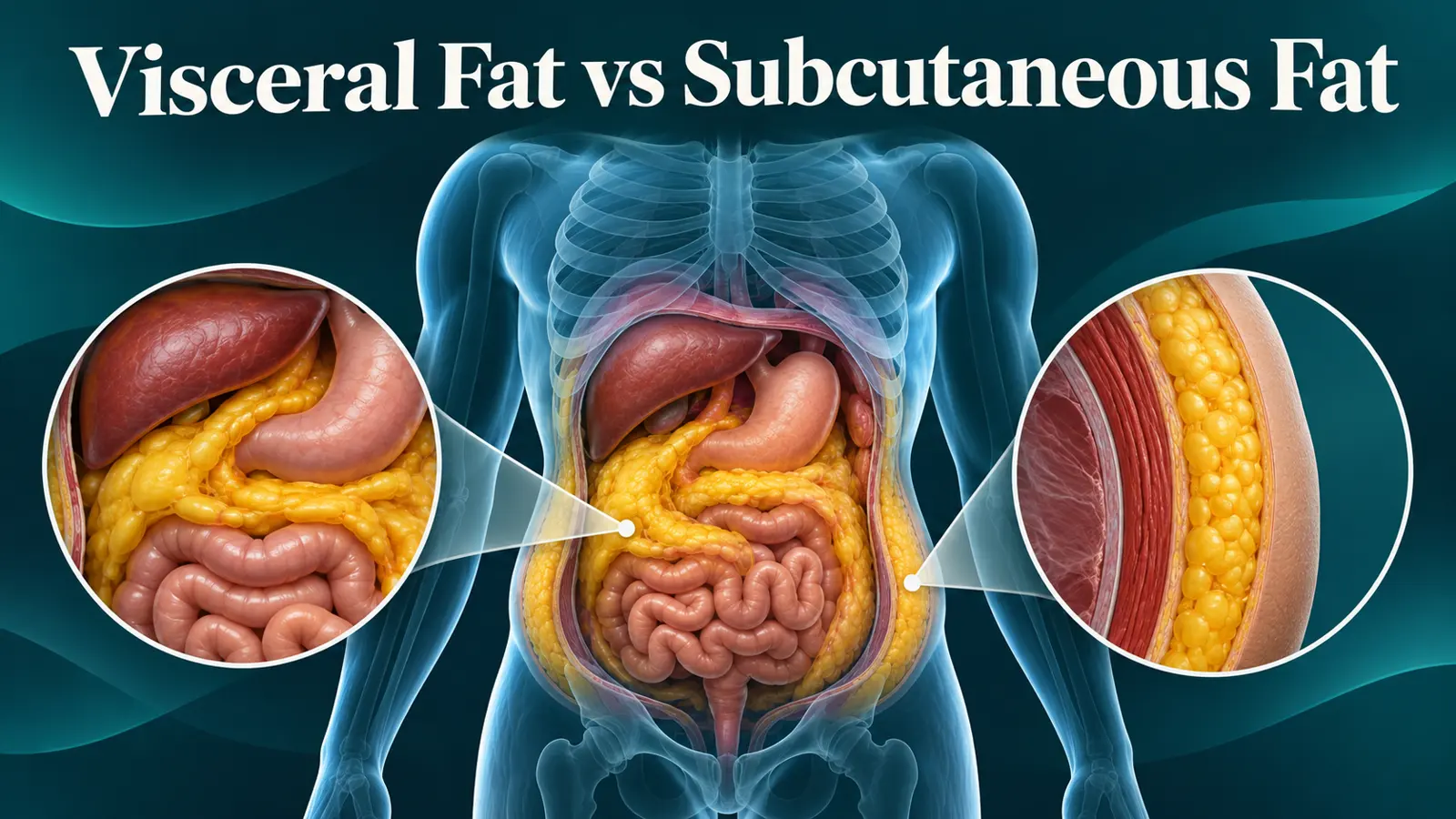
Two people can have the same weight and very different health risks. One reason is that body fat is stored in different places. Subcutaneous fat lies beneath the skin. Visceral fat is found deeper in the abdomen around internal organs. Both are normal tissues in appropriate amounts, but excess visceral fat is more strongly linked with cardiometabolic risk. That does not mean a person can see or feel an exact visceral-fat amount by looking in the mirror.
This guide explains the difference, how each is measured, and which actions are supported by evidence. It focuses on fat location rather than a generic weight-loss plan. Our waist-to-height ratio guide discusses a simple screening measurement, while this article explains the tissue behind that number. iMedi is a physician-led health service, not a clinic, and a personal risk assessment needs more than an image or a smart scale.
Where is each type of fat stored?
Subcutaneous fat sits between the skin and muscle. You can often pinch some of it at the abdomen, hips or arms. Visceral fat sits inside the abdominal cavity around organs. It cannot be pinched directly. A large waist can suggest more abdominal fat, but it does not separate visceral from subcutaneous compartments precisely. Different people store fat differently because of genetics, age, sex hormones, activity and other factors.
Both compartments have biological roles. Fat stores energy and participates in hormone and immune signaling. The concern is excess or dysfunctional adipose tissue, especially when accompanied by high blood pressure, abnormal lipids, insulin resistance or fatty liver. Calling all body fat “bad” oversimplifies physiology and can promote unhelpful fear.
Why is visceral fat discussed in metabolic health?
Visceral adiposity is associated with higher risk of insulin resistance, type 2 diabetes and cardiovascular disease. It can release fatty acids and signaling molecules into circulation in ways that affect the liver and other tissues. Yet association in population studies does not allow a person to predict their future from one visceral-fat estimate. Blood pressure, glucose, lipids, family history and lifestyle still matter.
A person with normal BMI can have excess central fat, and a person with higher BMI may have a different risk profile depending on where fat is stored and other clinical factors. This is why risk assessment goes beyond weight. Our family heart history guide shows how inherited risk changes the interpretation of otherwise reassuring numbers.
Is subcutaneous fat harmless?
Not necessarily. Large amounts of subcutaneous fat can contribute to mechanical load and overall adiposity-related risk. Its location and function matter. Lower-body subcutaneous fat may have different associations from abdominal subcutaneous fat. The key point is that visceral and subcutaneous fat are not interchangeable, not that one is always safe and the other always dangerous.
Health decisions should focus on the whole person rather than trying to eliminate a specific compartment. Rapid weight-loss products often promise to target “stubborn visceral fat,” but a visible change on the abdomen cannot prove which compartment changed. Sustainable improvement in waist, fitness and clinical markers is more meaningful than a marketing claim.
Can you measure visceral fat at home?
A tape measure can assess waist circumference, a practical proxy for central adiposity. Waist-to-height ratio can add context. Neither directly measures visceral fat. Smart scales commonly estimate “visceral fat” using bioelectrical impedance and a proprietary algorithm. Hydration, meal timing and device differences can change the estimate. Treat it as a rough trend, not a diagnosis or a precise mass of fat.
Measure your waist consistently if you choose to track it. Use the same point, a level tape and similar conditions. A single small difference can reflect technique. Your clinician can interpret the trend alongside blood pressure, glucose and lipids. If tracking body measurements causes distress, discuss another way to monitor health.
What do CT, MRI and DEXA show?
CT and MRI can distinguish abdominal fat compartments more directly, but they are not routine tests for everyone interested in wellness. CT involves radiation. MRI can be expensive and may not be necessary for a clinical decision. DEXA can estimate body composition and some regional fat measures, but methods and outputs vary. No scan should be ordered solely because an app shows a concerning icon.
Imaging may already exist for another medical reason, and a clinician may use that information in context. The value of additional testing depends on whether the result changes treatment. If waist is high and metabolic markers are abnormal, you can begin evidence-based risk reduction without first measuring visceral fat to the gram.
What changes visceral fat over time?
Regular physical activity, including aerobic movement and strength work, can help reduce central adiposity and improve metabolic markers. Nutrition patterns that support a sustainable energy balance matter as well. Sleep and alcohol use may influence overall metabolic health. No single food, supplement or exercise “melts” visceral fat selectively. A realistic plan is more useful than an intense short challenge.
The CDC adult activity guidelines recommend at least 150 minutes of moderate activity weekly plus muscle-strengthening work on two days. Start at a level you can maintain. Our Zone 2 training guide explains a practical way to judge moderate effort. The exact mix should reflect your health and ability.
Why muscle and waist should be considered together
Weight loss can include muscle loss. If waist falls but strength also declines sharply, the plan may need review. Preserving muscle supports function and glucose handling as people age. Protein intake, resistance training and enough total nutrition can help. This is especially important during rapid or medication-assisted weight loss. The goal is improved health, not simply a lower scale number.
Some people see a stable weight while waist decreases and strength improves. That may represent a favorable shift in body composition, although no single measure proves it. Look at trends over months and clinical markers. Our protein and strength training guide covers the complementary muscle side of healthy ageing.
When should you discuss your risk with a clinician?
Seek an assessment if waist circumference is increasing alongside high blood pressure, abnormal sugar or lipid results, fatty liver, or a strong family history of diabetes or heart disease. Unexplained abdominal swelling is not necessarily fat and should be examined. A clinician can decide whether blood tests, imaging or another evaluation is needed. Do not rely on a body-fat app to explain new symptoms.
Ask which measures will be tracked and what change would matter. A sensible plan might include blood pressure, HbA1c or glucose, lipids, waist and activity habits. The right selection depends on age and medical history. Specific treatment decisions may include medication when indicated, but they should not be based on a smart-scale visceral-fat score alone.
Frequently asked questions
Can I tell visceral fat from a photo?
No. A photo or mirror cannot separate visceral and subcutaneous fat. Waist is a proxy; imaging is more direct but not always needed.
Is a normal BMI enough to rule out visceral fat risk?
No. Central fat and metabolic risk can occur at a normal BMI. Waist and clinical markers add context.
Do sit-ups burn visceral fat?
Abdominal exercises strengthen muscles but do not selectively remove fat from that area. Whole-body activity and sustainable nutrition matter.
Is my smart scale's visceral-fat score accurate?
It is an estimate influenced by the device and measurement conditions. Use it cautiously and do not treat it as a diagnosis.
Should everyone get an abdominal CT?
No. CT involves radiation and is not a routine wellness test for this purpose. A clinician can advise when imaging is clinically needed.
What should I track instead?
Waist trend, blood pressure, glucose and lipid results, fitness and strength can give a more useful view of health over time.