Preventive Healthcare vs Reactive Healthcare: What's the Difference?
Learn the difference between preventive and reactive healthcare, why prevention matters, and how early health assessments can help you maintain long-term wellness.
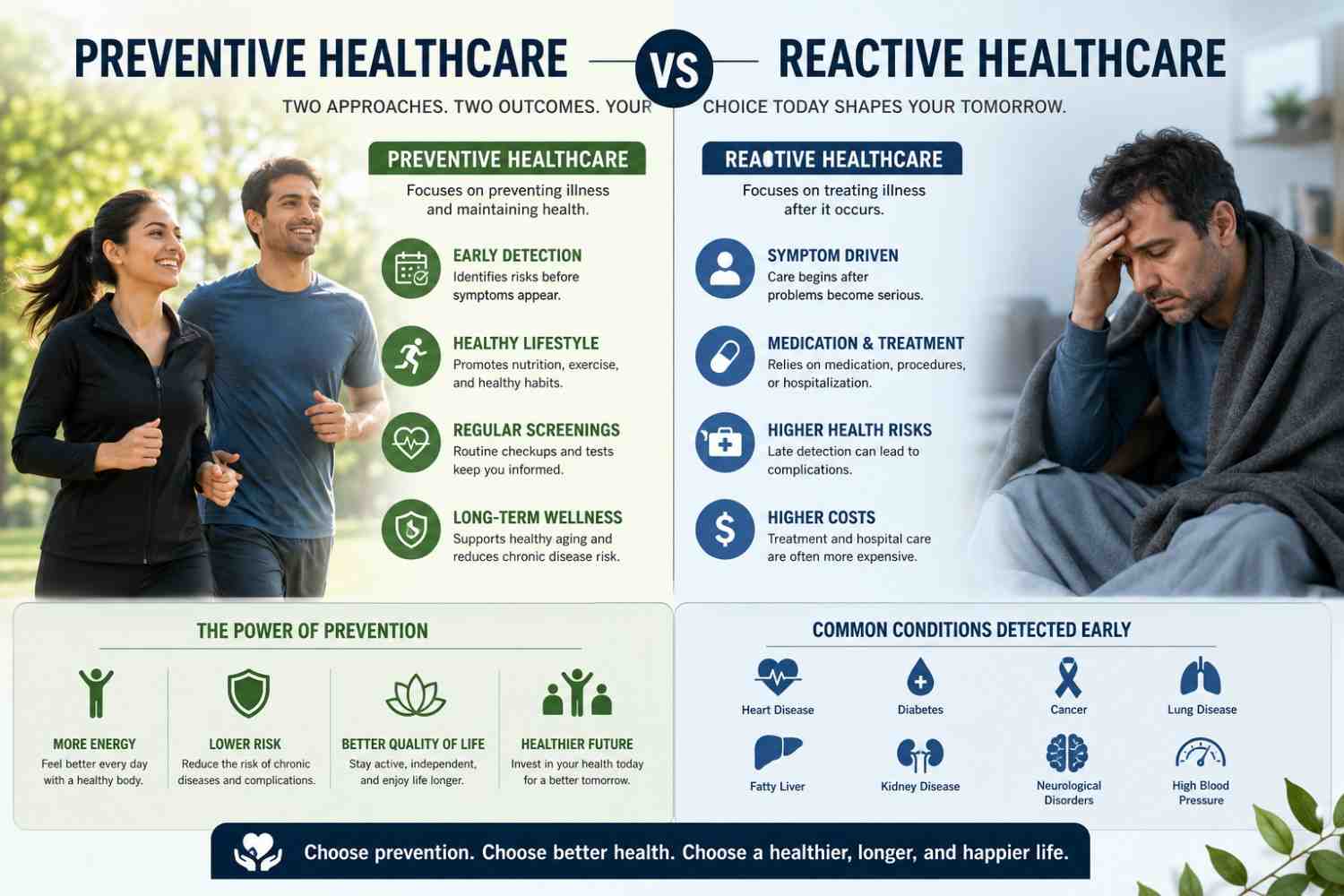
Most people visit a doctor only after they experience symptoms. While this approach has helped treat countless illnesses, modern healthcare is shifting toward something more effective: preventing health problems before they develop. Understanding the difference between preventive healthcare and reactive healthcare can help you make informed decisions that support better health today and in the years ahead.
Rather than waiting for disease to appear, preventive healthcare focuses on identifying potential risks early, improving lifestyle habits, and monitoring important health markers. This proactive approach can help reduce the likelihood of developing chronic conditions while improving quality of life.
What is Preventive Healthcare?
Preventive healthcare is an approach that focuses on maintaining health and reducing disease risk before symptoms appear. Instead of treating illness after it develops, preventive care emphasizes regular health assessments, healthy lifestyle choices, vaccinations, screenings, and ongoing monitoring.
The goal is simple: detect potential health issues early when they are easier to manage and often easier to reverse through appropriate medical care and lifestyle modifications.
Preventive healthcare commonly includes:
Routine health checkups
Blood investigations and biomarker assessments
Lifestyle counseling
Nutritional guidance
Vaccinations
Cancer screening where appropriate
Cardiovascular risk assessment
Many people begin preventive care while they still feel healthy because several chronic conditions, including diabetes, high blood pressure, fatty liver disease, and metabolic disorders, may develop silently over many years.
What is Reactive Healthcare?
Reactive healthcare is the traditional model most people are familiar with. It focuses on diagnosing and treating illnesses after symptoms appear. While reactive care remains essential for emergencies, injuries, infections, and complex medical conditions, it often begins only after the body has already been affected.
Examples of reactive healthcare include:
Visiting a doctor after chest pain develops
Treating diabetes after blood sugar remains uncontrolled
Managing obesity after significant weight gain
Treating hypertension after consistently elevated blood pressure readings
Seeking medical attention only after persistent symptoms appear
Reactive healthcare plays a critical role in medicine. However, many chronic diseases begin years before noticeable symptoms develop. Waiting until symptoms appear may reduce opportunities for earlier intervention.
Preventive Healthcare vs Reactive Healthcare
Preventive HealthcareReactive HealthcareFocuses on preventing diseaseFocuses on treating diseaseEarly health assessmentsMedical care after symptoms developSupports long-term wellnessManages existing illnessEncourages healthier lifestyle habitsOften depends on medication and treatmentIdentifies risk factors before complications occurTreats complications after they appear
Why Prevention Matters
Many common health conditions develop gradually. Blood sugar levels may slowly increase, cholesterol may rise, inflammation can persist unnoticed, and blood pressure may remain elevated without causing discomfort. Because these changes often occur silently, people frequently assume they are healthy until complications develop.
Preventive healthcare allows individuals to understand what is happening inside the body long before symptoms become obvious. Regular health assessments can help identify changes that may otherwise remain undetected.
Benefits of preventive healthcare include:
Earlier identification of health risks
Better long-term health outcomes
Improved metabolic health
Reduced risk of chronic diseases
Better quality of life as you age
More informed healthcare decisions
The Role of Biomarkers in Preventive Healthcare
One of the biggest advances in preventive healthcare is the growing use of biomarkers. Biomarkers are measurable indicators that provide valuable information about how different systems in your body are functioning.
Tracking important biomarkers can help identify changes long before symptoms appear. Instead of relying only on how you feel, healthcare professionals can evaluate objective health data to better understand potential risks.
If you're interested in learning more about important health markers, explore our guide on Top Biomarkers Everyone Should Track for Healthy Aging.
Prevention Goes Beyond Annual Checkups
Preventive healthcare is not limited to annual physical examinations. It involves building healthy habits that support your body every day.
These include:
Balanced nutrition
Regular physical activity
Quality sleep
Stress management
Maintaining a healthy weight
Monitoring important biomarkers
Routine health screenings based on age and risk factors
For individuals working toward better metabolic health, our article on How to Improve Metabolic Health Naturally provides practical lifestyle strategies that complement preventive healthcare.
Can Preventive Healthcare Help with Healthy Aging?
Healthy aging is about maintaining physical, mental, and metabolic health as you grow older. Preventive healthcare supports this goal by helping identify health risks early, encouraging healthier habits, and monitoring changes that naturally occur with age.
Rather than focusing only on lifespan, preventive care also emphasizes healthspan, the number of years you remain active, independent, and healthy. Small lifestyle improvements made today can have a meaningful impact on long-term wellbeing.
Our guide on Longevity Medicine Explained explores how preventive healthcare and longevity medicine work together to support healthier aging.
Who Should Prioritize Preventive Healthcare?
Preventive healthcare is valuable for everyone, regardless of age. However, it becomes especially important for individuals with a family history of chronic disease, sedentary lifestyles, excess weight, or other health risk factors.
You should consider regular preventive health assessments if you:
Are over 30 years of age
Have a family history of diabetes or heart disease
Are overweight or obese
Have high blood pressure or elevated cholesterol
Experience ongoing stress or poor sleep
Lead a physically inactive lifestyle
Want to improve long-term health and wellbeing
Preventive Healthcare is an Investment in Your Future
Many people think healthcare begins when they become ill. In reality, the healthiest outcomes often come from taking action before illness develops. Routine screenings, healthy lifestyle choices, and regular monitoring can help identify risks early and support better long-term health.
Preventive healthcare doesn't replace reactive healthcare. Instead, the two approaches complement each other. While reactive care is essential for treating illness, preventive care aims to reduce the likelihood of those illnesses developing in the first place.
Frequently Asked Questions (FAQs)
1. What is the main difference between preventive and reactive healthcare?
Preventive healthcare focuses on maintaining health and identifying risks before symptoms develop, while reactive healthcare focuses on diagnosing and treating illnesses after they occur.
2. Why is preventive healthcare important?
Preventive healthcare helps detect health risks early, supports healthier lifestyle choices, improves long-term wellbeing, and may reduce the risk of developing chronic diseases.
3. At what age should I start preventive health screenings?
Preventive healthcare can benefit adults of all ages. The type and frequency of health screenings depend on factors such as age, family history, lifestyle, and individual risk factors.
4. What are examples of preventive healthcare?
Examples include routine health checkups, vaccinations, blood tests, biomarker monitoring, cancer screenings, blood pressure checks, nutrition counseling, exercise guidance, and maintaining a healthy lifestyle.
5. Is preventive healthcare only for older adults?
No. Preventive healthcare is beneficial throughout adulthood. Starting early allows potential health risks to be identified before they progress into more serious conditions.
6. How do biomarkers support preventive healthcare?
Biomarkers provide measurable information about how different systems in your body are functioning. Monitoring biomarkers can help identify changes in metabolic, cardiovascular, and overall health before noticeable symptoms appear.
Final Thoughts
Healthcare is evolving from simply treating illness to helping people stay healthier for longer. Preventive healthcare empowers individuals to understand their health, identify potential risks early, and make informed lifestyle choices that support long-term wellbeing.
Whether your goal is improving metabolic health, supporting healthy aging, or reducing your risk of chronic disease, prevention provides an opportunity to take control of your health before problems develop.
At imedi.health, we believe better health begins with understanding your body early. Through preventive healthcare, biomarker assessments, metabolic health optimization, and personalized care, our goal is to help you make informed decisions that support a healthier future.