Inflammaging: What Chronic Inflammation Means for Healthy Ageing
Chronic low-grade inflammation is often discussed in anti-aging circles. Learn what is established, what is uncertain, and what can be acted on.
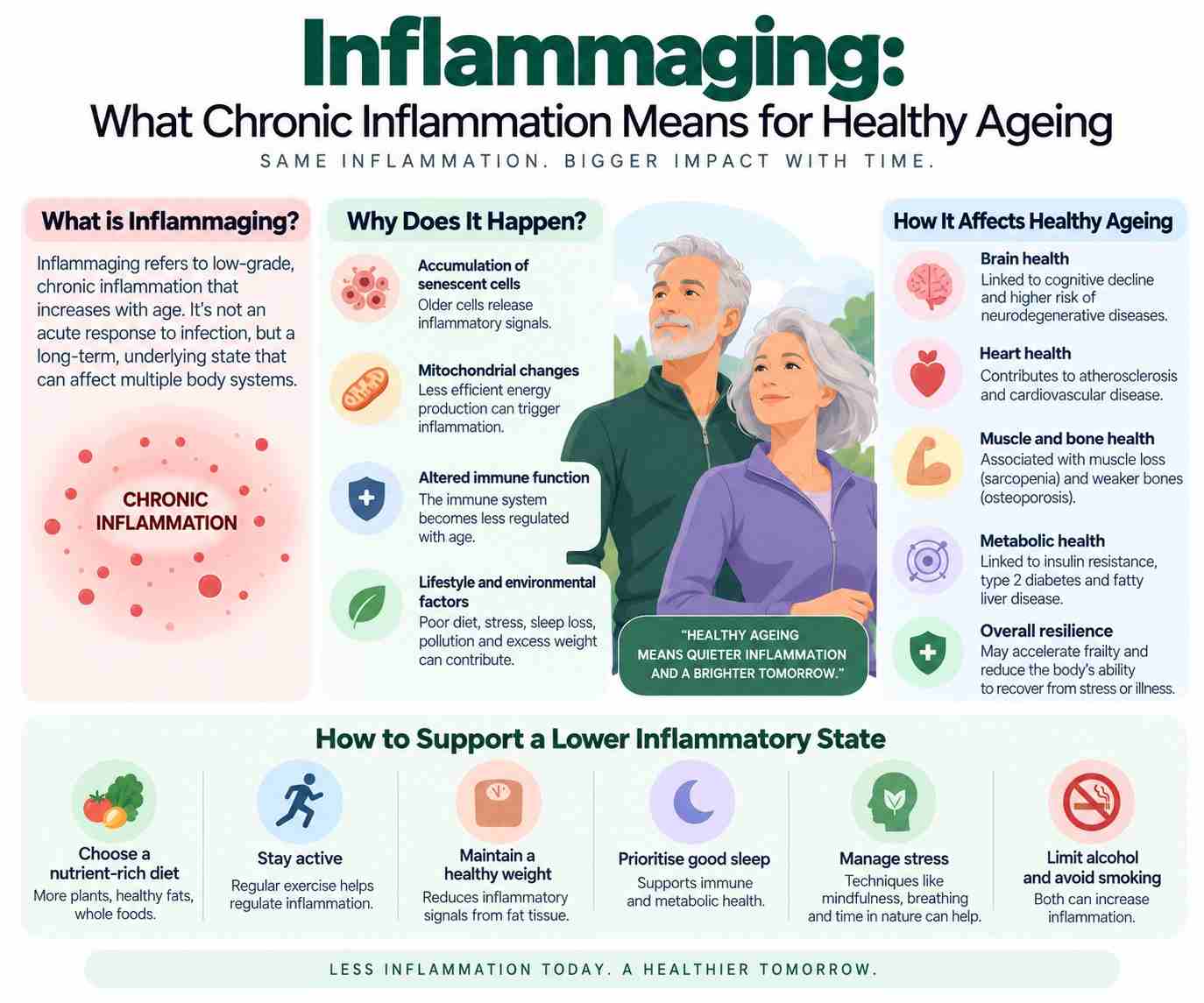
Inflammaging describes a low-grade, chronic inflammatory state that tends to develop gradually with age, distinct from the acute, protective inflammation the body produces in response to an infection or injury. Unlike acute inflammation, which resolves once its job is done, inflammaging persists quietly in the background for years, and it is increasingly understood as a driving contributor to many of the chronic diseases associated with ageing, rather than simply an incidental byproduct of getting older.
Acute Inflammation Versus Inflammaging
Acute inflammation is a normal, necessary, short-term response, redness and swelling around a cut, fever during an infection, that resolves as healing occurs. Inflammaging is different: a persistent, low-level elevation in inflammatory markers that does not resolve, driven by a combination of ageing immune function, accumulated cellular damage, visceral fat tissue, and chronic low-grade stressors, rather than any single acute trigger.
Why Inflammaging Matters for Long-Term Health
Chronic low-grade inflammation is mechanistically linked to insulin resistance, atherosclerosis, cognitive decline, and reduced muscle mass, among other age-related conditions. Rather than being a separate concern from these conditions, inflammaging is increasingly viewed as a shared underlying driver connecting several major age-related diseases, which is part of why addressing it has implications well beyond any single organ system.
How Inflammaging Is Measured
High-sensitivity CRP (hs-CRP) is the most widely available and commonly used marker of low-grade systemic inflammation in routine clinical practice. Research settings sometimes measure additional inflammatory cytokines, but hs-CRP remains a practical, accessible starting point for most people interested in tracking this aspect of their metabolic and ageing health, and it is covered in more detail in our article on the metabolic health checkup and biomarkers beyond HbA1c.
Visceral Fat as a Major Driver
Visceral fat, the fat surrounding internal organs rather than sitting just under the skin, is metabolically active tissue that actively secretes inflammatory signalling molecules, making it one of the most significant contributors to inflammaging. This is part of why waist circumference and body composition, not just overall body weight, are important markers when assessing someone's inflammatory and metabolic risk profile.
Muscle Loss and Inflammation Reinforce Each Other
Chronic inflammation itself can contribute to muscle breakdown, while reduced muscle mass is associated with higher inflammatory markers, creating a cycle where each factor worsens the other over time. This connects directly to the themes covered in our article on muscle as a longevity organ, since maintaining muscle mass through resistance training is one of the more effective, accessible ways to help interrupt this cycle.
Diet's Role in Inflammaging
Diets high in refined carbohydrate, processed food, and added sugar are associated with higher inflammatory markers, while diets rich in vegetables, fruit, fibre, and healthy fats, similar to a broadly Mediterranean-style pattern, are consistently associated with lower inflammatory markers across population studies. This is not about any single "anti-inflammatory" food, but rather an overall dietary pattern sustained over years.
Sleep and Stress Are Independent Contributors
Poor sleep and chronic psychological stress both independently raise inflammatory markers, adding to the burden from diet and visceral fat. This connects to the mechanisms covered in our article on sleep and insulin resistance, reinforcing that inflammaging is influenced by multiple, interacting lifestyle factors rather than any single cause.
Exercise as an Anti-Inflammatory Intervention
Regular physical activity, including both aerobic exercise and resistance training, has a well-documented anti-inflammatory effect over time, even though a single intense workout produces a temporary, acute rise in inflammatory markers as part of the normal muscle repair process. It is the consistent, long-term pattern of regular activity that produces a measurably lower baseline inflammatory state, not occasional exercise alone.
A Practical Approach to Managing Inflammaging
Reducing visceral fat through diet and exercise, maintaining muscle mass through resistance training, prioritising sleep quality and consistency, and following a dietary pattern rich in whole foods rather than highly processed ones together address the major modifiable contributors to inflammaging. Tracking hs-CRP periodically, alongside the other biomarkers covered in our metabolic health checkup article, gives a concrete way to monitor whether these changes are producing a measurable effect over time.
Assess Your Inflammatory Markers
Frequently Asked Questions (FAQs)
1. Is some inflammation always present as people age?
A degree of low-grade inflammation is common with ageing, but the extent varies considerably between individuals based on lifestyle factors, making it a meaningfully modifiable process rather than a fixed, unavoidable one.
2. Can hs-CRP be elevated without any obvious illness?
Yes, chronic low-grade inflammation associated with inflammaging can elevate hs-CRP even in someone who feels entirely well and has no acute illness.
3. How quickly can lifestyle changes lower inflammatory markers?
Meaningful reductions in hs-CRP are often observed within a few months of consistent changes to diet, exercise, and sleep, though individual response varies.
4. Is visceral fat the same as subcutaneous fat under the skin?
No, visceral fat surrounds internal organs and is more metabolically active and inflammatory than subcutaneous fat, which sits just beneath the skin.
5. Can a single intense workout raise inflammation temporarily?
Yes, this is a normal, short-term part of the muscle repair process and is different from the chronic, low-grade inflammation associated with inflammaging.
6. Should everyone get hs-CRP tested as part of routine checkups?
It is a reasonable addition for most adults, particularly those with other metabolic risk factors, though your physician can advise on the most appropriate testing frequency for your situation.
7. Are anti-inflammatory supplements a substitute for lifestyle changes?
No, while some supplements have modest evidence for reducing inflammatory markers, diet, exercise, sleep, and visceral fat reduction remain the most well-supported, foundational interventions.
This article is for educational purposes and does not replace personalized medical advice. Please consult a qualified physician before making changes to your treatment, medication, or health screening plan.