NAD+ Therapy: What It Actually Does, and Who It May Help
NAD+ IV therapy is one of the most marketed treatments in longevity medicine. Here's what's genuinely known, what's still unproven, and how to think about it clearly.
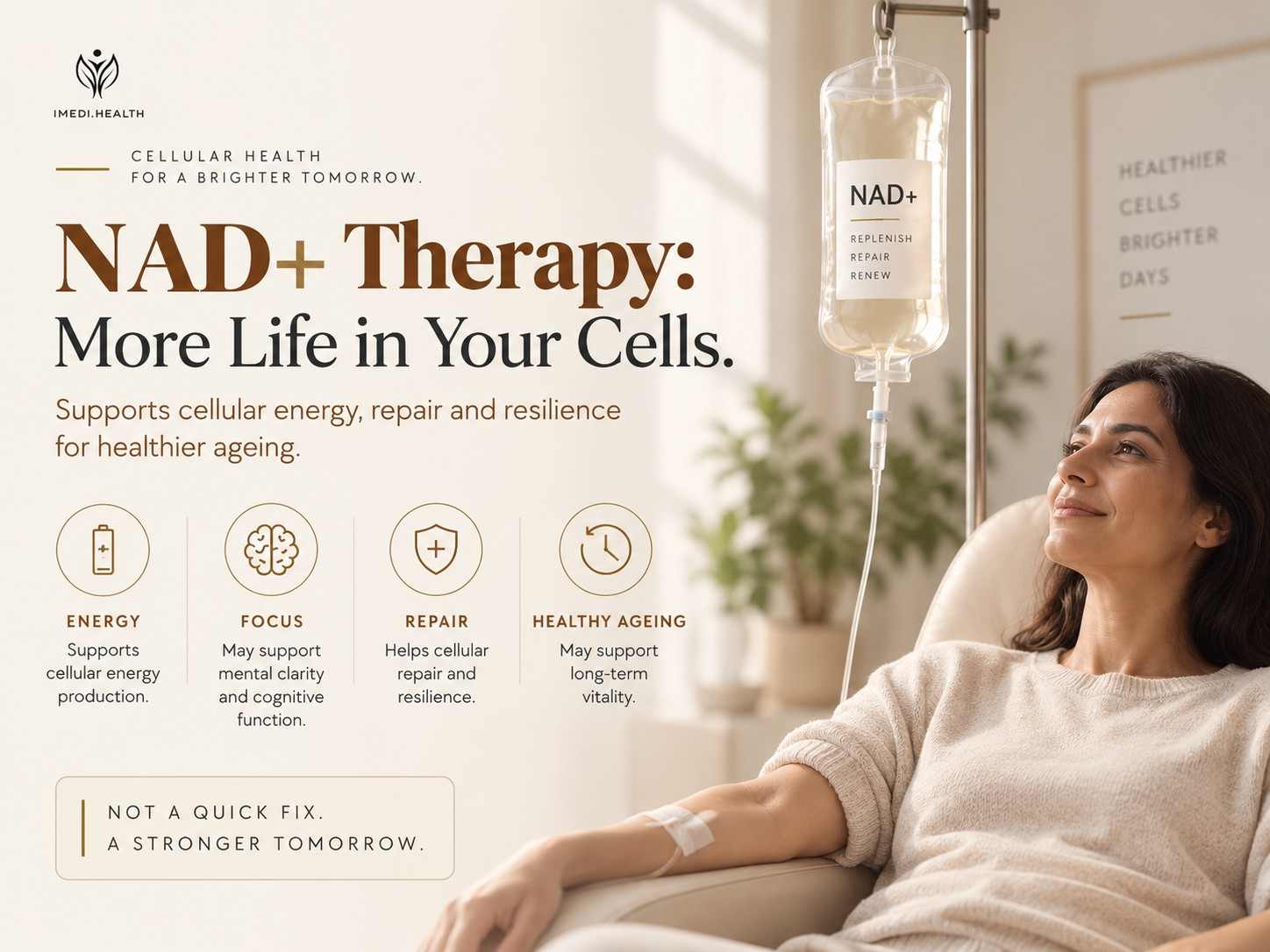
NAD+ (nicotinamide adenine dinucleotide) is one of the most talked-about compounds in longevity medicine, and also one of the most overhyped. Cutting through the marketing requires separating two very different things: what NAD+ does inside your cells, which is genuinely well established, and whether supplementing it from outside the body meaningfully changes health outcomes, which is a much less settled question.
What NAD+ Does in the Body
NAD+ is a coenzyme present in every cell, essential for converting food into cellular energy through mitochondrial metabolism. It's also a required cofactor for sirtuins, a family of proteins involved in DNA repair and cellular stress response, and for PARP enzymes, which help repair damaged DNA. NAD+ levels are well documented to decline with age in animal studies and human tissue samples, and this decline has been linked in preclinical research to reduced mitochondrial function, impaired DNA repair capacity, and several markers associated with aging.
This part of the science is genuinely solid: NAD+ matters, and it does decline with age.
Where the Evidence Gets Thinner
The leap from "NAD+ declines with age and matters for cellular function" to "external NAD+ or its precursor supplements meaningfully reverse aging or improve health in humans" is a much bigger one, and the current evidence doesn't fully support it yet. A few honest points:
Most of the striking results, extended lifespan, improved mitochondrial function, reversed markers of aging, come from animal studies, primarily in mice, which don't always translate to humans.
Human trials of NAD+ precursors (like NMN and NR, taken orally) show some promising early signals on markers such as insulin sensitivity and blood pressure in small studies, but results have been mixed, and large, long-term human trials with hard clinical endpoints are still limited.
Direct NAD+ IV infusion, as opposed to oral precursor supplementation, has even less controlled human trial data behind it specifically. Much of what's marketed around IV NAD+ therapy for energy, cognition, or "anti-aging" is based on physiological plausibility and anecdotal reports rather than rigorous clinical trials.
Whether IV-administered NAD+ is even effectively taken up and used by cells throughout the body, versus largely metabolised before reaching target tissues, is itself a point of ongoing scientific discussion.
So Is NAD+ Therapy Worth Considering?
This is where the honest answer is "it depends on your expectations." NAD+ IV therapy is generally considered low-risk when administered by a qualified clinician, and many people report subjective improvements in energy and mental clarity. Whether this reflects a genuine physiological effect, a placebo response, or simply the effect of being well-hydrated and medically monitored is difficult to fully disentangle with current evidence. It should not be positioned, or purchased, as a proven anti-aging treatment, a cure for chronic fatigue, or a substitute for addressing the more evidence-backed foundations of metabolic health covered in our biomarker and insulin resistance articles.
What We Recommend
If you're curious about NAD+ therapy, treat it as a complementary option within a broader, evidence-based longevity plan, not a replacement for addressing sleep, nutrition, exercise, and the biomarkers that have a much stronger evidence base behind them. At iMedi, NAD+ therapy is offered as part of our regenerative programme with this context provided upfront, rather than marketed as a standalone miracle treatment.
How NAD+ Therapy Is Typically Administered
NAD+ IV therapy is usually delivered as a slow intravenous infusion over one to several hours, with the exact duration and dose varying by protocol and clinic. Some people experience mild, temporary side effects during infusion, such as flushing, chest tightness, or nausea, generally related to the infusion rate and typically managed by slowing it down. Protocols vary considerably, from a single session to a course of several sessions spaced over weeks, and there is currently no standardised, evidence-backed protocol that's been shown to be clearly superior, which is itself a reflection of how early-stage the clinical research still is. Any reputable clinic offering NAD+ therapy should be transparent about this variability rather than presenting a specific protocol as the scientifically proven approach.
Questions Worth Asking Before You Start
Before committing to a course of NAD+ therapy, it's reasonable to ask your provider what specific outcome you should expect, over what timeframe, and how that outcome will be measured, rather than accepting subjective "you'll feel better" claims alone. It's also worth asking whether the same budget might be better allocated toward the more evidence-backed foundations covered elsewhere in this article, particularly if you haven't yet had basic metabolic and micronutrient testing done.
How This Fits Into a Broader Plan
The most sensible way to think about NAD+ therapy is as one small piece of a much larger picture rather than a headline intervention. Correcting the deficiencies and metabolic dysfunction covered in our articles on vitamin D, B12, and ferritin and fasting insulin is likely to have a larger, better-evidenced impact on your day-to-day energy than an NAD+ infusion alone, and addressing those foundations first, before or alongside any interest in NAD+ therapy, is the approach we generally recommend.
This isn't a dismissal of NAD+ therapy so much as a request for proportion: it can reasonably sit within a well-rounded longevity plan, but it shouldn't be the first, or only, intervention someone reaches for when the more foundational, better-evidenced pieces haven't yet been addressed.
Frequently Asked Questions (FAQs)
1. Can NAD+ therapy be combined with other longevity treatments?
It can be, but it should be positioned as a complementary addition to a broader plan rather than a replacement for addressing sleep, nutrition, exercise, and the biomarkers with a stronger evidence base.
2. Does NAD+ therapy actually reverse aging?
There is no solid human clinical evidence that NAD+ therapy reverses aging. NAD+ decline with age and its cellular role in energy production and DNA repair are well established, but claims of reversing aging in humans go well beyond current evidence, most of which comes from animal studies.
3. Is NAD+ IV therapy safe?
Generally considered low-risk when administered by a qualified clinician in an appropriate setting, though as with any IV therapy, it should be done under proper medical supervision.
4. What's the difference between NAD+ IV therapy and NMN/NR supplements?
NAD+ IV therapy delivers NAD+ directly into the bloodstream, while NMN and NR are oral precursor compounds the body converts into NAD+. Both have some early-stage human research, though evidence remains limited for both approaches.
5. Who might reasonably consider NAD+ therapy?
People interested in a complementary addition to an evidence-based longevity plan, with realistic expectations about the current state of the evidence, rather than as a primary or standalone intervention.
6. How much does NAD+ therapy cost in India?
Pricing varies by clinic and protocol (dose and frequency of sessions). It's worth discussing directly with your provider along with realistic expectations about outcomes.
7. Are there better-evidenced alternatives to NAD+ therapy for energy and vitality?
Yes. Addressing sleep quality, resistance training, fasting insulin and thyroid function, and correcting deficiencies in vitamin D, B12, and iron typically have a stronger evidence base for improving energy than NAD+ therapy alone.
This article is for educational purposes and does not replace personalized medical advice. Please consult a qualified physician before making changes to your treatment, medication, or health screening plan.