GLP-1 for Weight Loss: How It Works, Benefits, and Who It Is For
Learn how GLP-1 works for weight loss, its benefits, side effects, and who should consider this medical weight loss treatment.
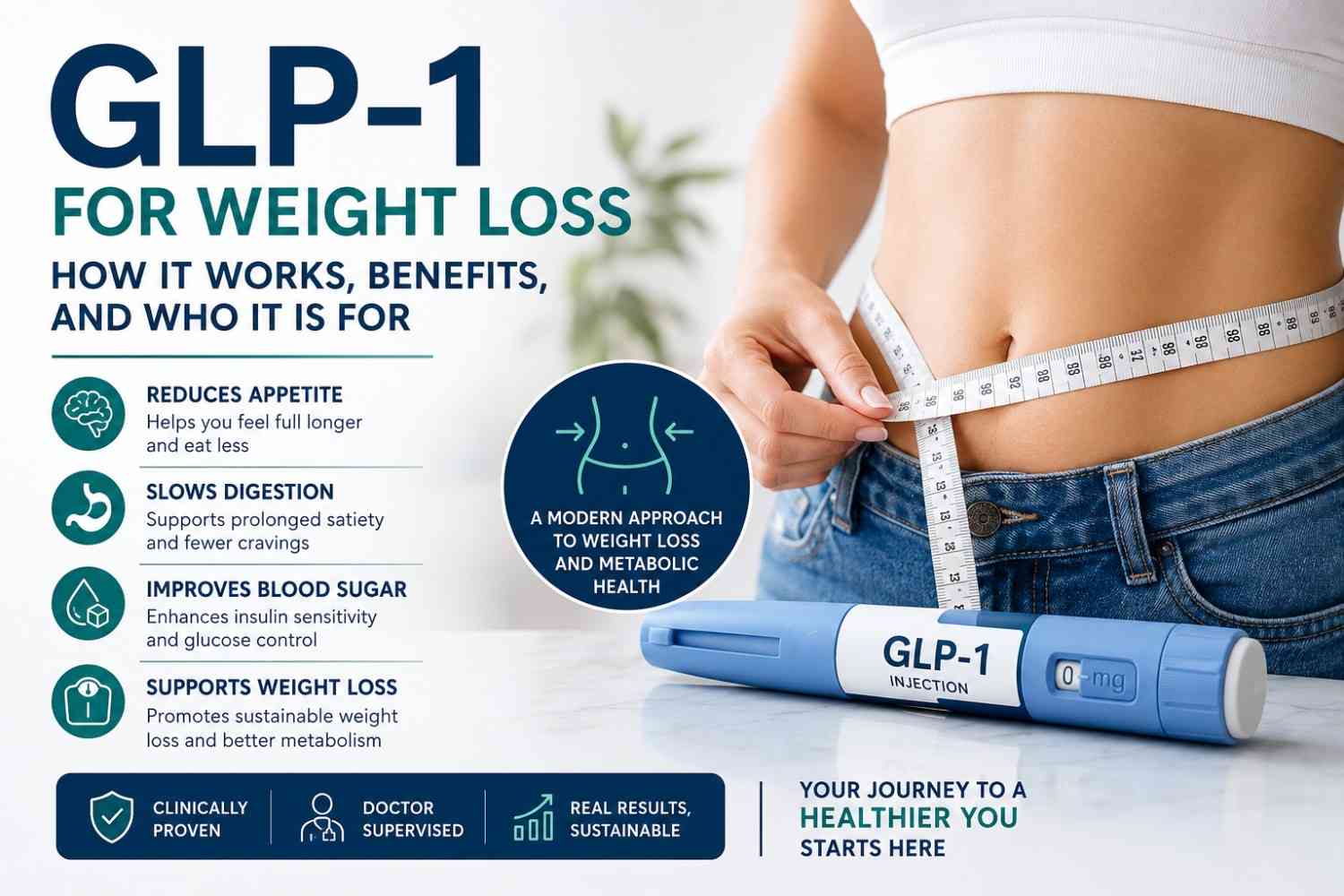
Weight loss is no longer just about diet and exercise. Advances in medical science have introduced new approaches that target the root causes of obesity and metabolic dysfunction. One of the most talked-about options today is GLP-1 for weight loss. If you have been searching for a reliable GLP-1 weight loss guide, this article will help you understand how it works, its benefits, and whether it is the right choice for you.
GLP-1-based treatments are increasingly being used in clinical weight loss programs to support individuals who struggle with obesity, insulin resistance, or metabolic issues. Unlike traditional methods, these treatments focus on hormonal regulation and appetite control, making weight loss more sustainable.
What is GLP-1?
GLP-1 (Glucagon-Like Peptide-1) is a naturally occurring hormone in the body that plays a key role in regulating blood sugar levels and appetite. It is released in the gut after eating and helps signal the brain that you are full.
In medical treatments, GLP-1 receptor agonists are used to mimic this hormone. These medications enhance the body’s natural processes, helping individuals eat less, feel fuller longer, and maintain better control over their metabolism.
How GLP-1 Works for Weight Loss
GLP-1 medications work through multiple mechanisms to support weight loss:
- Reduce appetite and cravings
- Slow down gastric emptying, making you feel full longer
- Improve insulin sensitivity
- Regulate blood sugar levels
- Support long-term metabolic health
This multi-action approach is what makes GLP-1 therapy different from traditional dieting methods, which often fail due to hunger and poor adherence.
Benefits of GLP-1 Weight Loss Treatment
1. Effective Weight Loss
Clinical studies show that GLP-1 treatments can lead to significant and sustained weight loss when combined with lifestyle changes.
2. Better Appetite Control
Patients often report reduced hunger and fewer cravings, making it easier to stick to a healthy eating plan.
3. Improved Blood Sugar Levels
GLP-1 medications are particularly beneficial for individuals with insulin resistance or type 2 diabetes.
4. Supports Metabolic Health
Beyond weight loss, these treatments help improve overall metabolic function and reduce health risks associated with obesity.
Who is GLP-1 Treatment For?
GLP-1 therapy is not for everyone, but it can be highly effective for:
- Individuals with obesity or overweight (BMI ≥ 25)
- People struggling with insulin resistance
- Patients with type 2 diabetes
- Those who have failed traditional weight loss methods
- Individuals looking for medically supervised weight loss
Are There Any Side Effects?
Like any medical treatment, GLP-1 medications may have side effects. Common ones include nausea, mild digestive discomfort, and reduced appetite. These are usually temporary and improve as the body adjusts.
It is important to consult a qualified healthcare provider before starting any treatment to ensure it is safe and suitable for your condition.
GLP-1 vs Traditional Weight Loss Methods
Traditional weight loss methods rely heavily on calorie restriction and exercise. While effective for some, they often fail due to hormonal imbalances and hunger signals.
GLP-1 therapy addresses these challenges by working at a hormonal level, making weight loss more manageable and sustainable over time.
Final Thoughts
GLP-1 therapy is changing the way we approach weight loss. By targeting appetite, metabolism, and hormonal balance, it offers a scientifically backed solution for individuals struggling with obesity and metabolic disorders.
If you are considering a medical weight loss program, consulting an expert can help determine whether GLP-1 treatment is the right option for you.