Shockwave Therapy (SWT) Machine: What It Treats, How It Works, and Who It's For
A shockwave therapy machine delivers focused acoustic pulses into injured tissue to stimulate healing. Here is what it treats, what a session involves, and who is a good candidate.
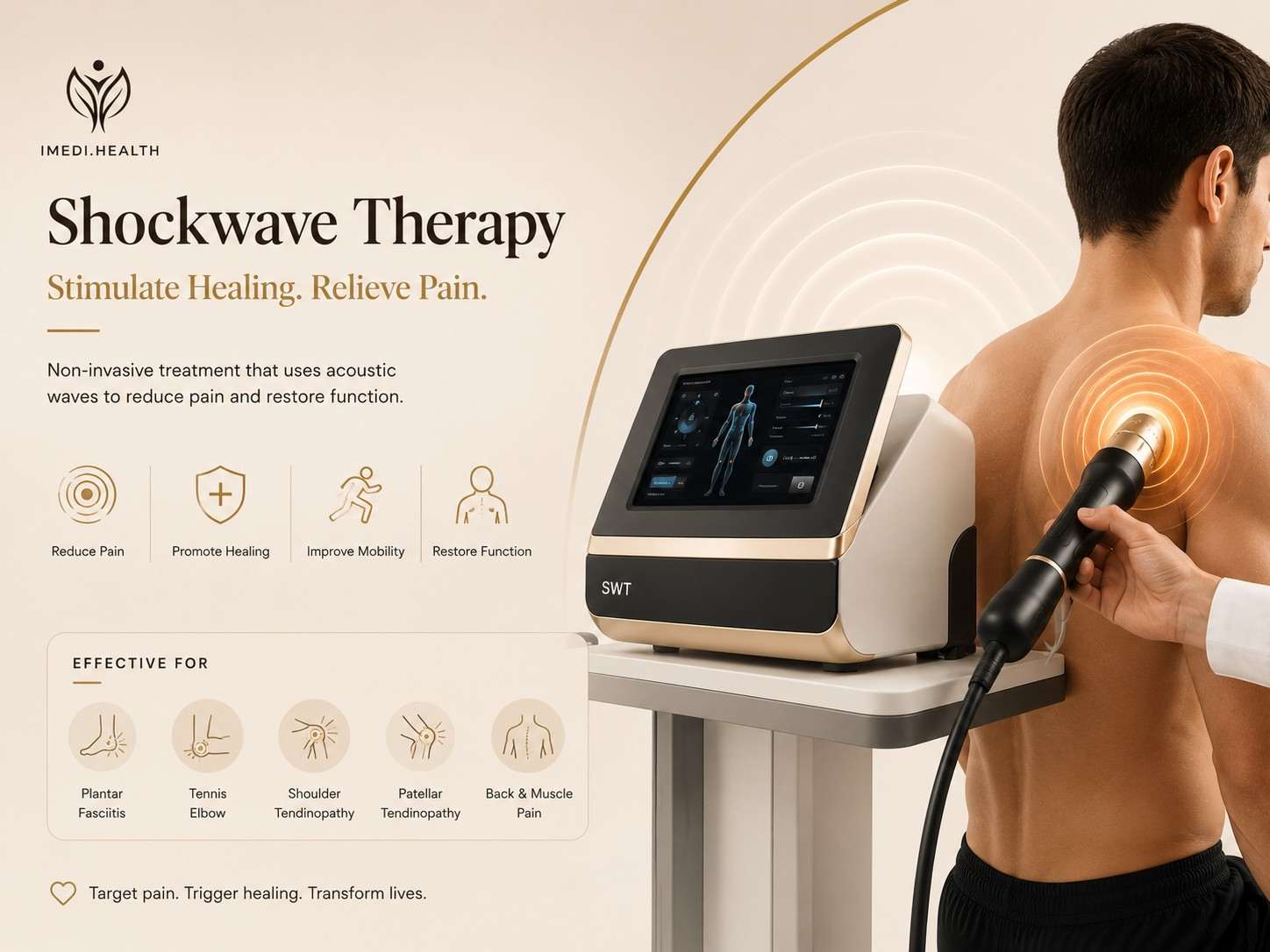
A shockwave therapy machine, often shortened to SWT, is a device used in physiotherapy and orthopedic practice to treat chronic tendon and soft tissue pain without surgery, injections, or medication. It has become one of the more common non-invasive options offered for stubborn conditions like plantar fasciitis and tennis elbow, conditions that often do not respond fully to rest, stretching, or standard physiotherapy alone.
What a Shockwave Therapy Machine Actually Does
The device generates high-energy acoustic pulses, essentially controlled pressure waves, and delivers them through the skin directly into the affected tissue using a handheld applicator. Despite the name, no electrical shock is involved. The "shock" refers to the sharp, rapid rise in pressure the wave creates, similar in principle to the shockwaves used in lithotripsy machines that break up kidney stones, though at a different intensity and applied to soft tissue rather than stone.
How It Stimulates Healing
The mechanism is not fully settled in the research, but a few effects are consistently observed and are thought to work together:
Mechanotransduction. The mechanical pressure of the shockwave triggers a cellular response in the treated tissue, prompting cells to release growth factors involved in tissue repair.
Increased local blood flow. Shockwaves stimulate the formation of new small blood vessels (neovascularization) in the treated area, improving blood supply to tissue that is often poorly vascularized to begin with, which is part of why some tendon injuries heal so slowly on their own.
Breakdown of calcific deposits. In conditions like calcific tendinitis of the shoulder, shockwaves can help fragment calcium deposits that have built up within the tendon, making them easier for the body to reabsorb.
Pain signal modulation. Shockwave application appears to temporarily reduce the sensitivity of local pain receptors, which is part of why some patients notice pain relief even within the first few sessions, before the underlying tissue has had time to structurally heal.
Focused vs Radial Shockwave: Two Different Technologies
Not all SWT machines work the same way, and the distinction matters for treatment planning.
Focused Shockwave
Focused devices concentrate energy at a specific depth and point, allowing precise targeting of deeper structures. This type is generally preferred for calcific tendinitis and deeper tendon pathology where accuracy matters.
Radial Shockwave
Radial devices disperse energy outward from the applicator tip across a wider, shallower area. This is commonly used for more superficial conditions and broader areas of muscular tightness or trigger points, and tends to be somewhat more comfortable during treatment.
Many physiotherapy clinics use radial systems since they are more versatile across a range of common complaints, while focused systems are more often found in specialized orthopedic or sports medicine settings.
Conditions Shockwave Therapy Is Commonly Used For
Plantar fasciitis, one of the conditions with the strongest evidence base for shockwave therapy, particularly for cases that have not improved after several months of standard treatment.
Lateral epicondylitis (tennis elbow) and medial epicondylitis (golfer's elbow).
Achilles tendinopathy, both mid-portion and insertional patterns.
Calcific tendinitis of the shoulder, where the mechanism of breaking down calcium deposits is particularly relevant.
Patellar tendinopathy (sometimes called jumper's knee), common in athletes with repetitive jumping or running loads.
Myofascial trigger points and areas of chronic muscular tightness, generally treated with radial devices.
What the Evidence Actually Shows
It is worth being direct about where the evidence is strong and where it is not, rather than presenting shockwave therapy as a universal fix. Evidence is strongest for plantar fasciitis and calcific shoulder tendinitis, where multiple clinical trials show meaningful pain reduction and functional improvement compared to placebo. Evidence for tennis elbow and Achilles tendinopathy is more mixed, with some trials showing clear benefit and others showing more modest effects, often depending on how chronic the condition is and how the therapy is combined with a structured loading and rehabilitation program. Shockwave therapy is generally not considered a first-line treatment; it is most often introduced after an adequate trial of standard physiotherapy, activity modification, and, where appropriate, other conservative measures has not resolved symptoms.
What a Session Actually Involves
Sessions are typically short, often 5 to 15 minutes, and are usually performed without anesthesia. Most patients feel a sensation ranging from mild discomfort to a dull, aching pressure during treatment, and the therapist can generally adjust intensity to keep this tolerable. A course of treatment commonly involves three to six sessions spaced about a week apart, rather than a single visit, since the tissue response builds cumulatively over the course of treatment.
What Happens Afterward
It is common to experience mild soreness, redness, or occasionally minor bruising in the treated area for a day or two after each session. Meaningful pain relief is usually gradual rather than immediate, often building over the several weeks following a completed course rather than appearing right after the first session. This is worth setting realistic expectations around, since patients hoping for instant relief after one visit are often disappointed by the actual pace of improvement, even when the treatment is ultimately effective.
Who Should Avoid Shockwave Therapy
Certain situations make shockwave therapy inappropriate or require caution, and a proper evaluation should screen for these before treatment begins:
Pregnancy, when treatment is planned near the abdomen or pelvis.
Bleeding disorders or current use of blood thinning medication, given the small bruising risk.
Treatment directly over a known tumor or malignancy.
Active infection in the area to be treated.
Open growth plates in children and adolescents, where the treated area involves a growth plate specifically.
Treatment directly over the lungs or major nerves in certain focused applications, which is part of why proper training and correct machine settings matter considerably.
Choosing Where to Have It Done
Because correct targeting, intensity, and treatment protocol genuinely affect both safety and results, shockwave therapy is best performed by a qualified physiotherapist or physician with specific training on the equipment, as part of a broader treatment plan rather than as an isolated, one-off procedure. It works best when combined with a structured exercise and loading program addressing the underlying cause of the tendon or soft tissue problem, not used as a standalone quick fix. Our physiotherapy program uses shockwave therapy as one tool within this kind of complete, individualized rehabilitation plan, alongside strength work and the broader functional assessments covered in our related article on grip strength and functional fitness markers.
Setting Realistic Expectations
Shockwave therapy is a genuinely useful tool for a specific, well-defined set of chronic tendon and soft tissue conditions, not a cure-all for every kind of pain. Patients who respond best are generally those with a clear diagnosis, a condition that fits the evidence base described above, and a willingness to combine sessions with the rehabilitation exercises their therapist recommends alongside it, rather than treatment sessions alone.
Chronic tendon and joint pain is also worth viewing in the context of overall functional health, since staying pain free and mobile is a meaningful part of healthy aging, an area covered more broadly in our longevity program.
Frequently Asked Questions (FAQs)
1. Is shockwave therapy painful?
Most patients describe a sensation of pressure or mild discomfort rather than sharp pain, and intensity can generally be adjusted by the therapist to keep it tolerable throughout the session.
2. How many sessions of shockwave therapy are usually needed?
Most treatment courses involve three to six sessions spaced about a week apart, though this varies by condition and how the tissue responds over the course of treatment.
3. How soon does shockwave therapy start working?
Some patients notice mild pain relief within the first couple of sessions, but meaningful, lasting improvement usually builds gradually over the weeks following a completed course rather than appearing immediately.
4. Is shockwave therapy the same as ultrasound therapy?
No, these are different technologies. Ultrasound therapy uses continuous sound waves for a gentler heating and healing effect, while shockwave therapy delivers discrete, high-energy acoustic pulses with a different mechanism of action.
5. Can shockwave therapy be used alongside physiotherapy exercises?
Yes, and this is generally the recommended approach. Shockwave therapy tends to produce better, more lasting results when combined with a structured strengthening and loading program rather than used in isolation.
6. Is shockwave therapy covered by insurance in India?
Coverage varies by insurer and policy, so it is worth checking directly with your provider, though many patients pay out of pocket given the relatively short course of treatment involved.
7. Can shockwave therapy make a condition worse?
When performed by a trained practitioner on an appropriate condition, this is uncommon, though mild soreness after a session is normal. Treating an inappropriate condition or using incorrect settings is why proper evaluation before starting matters.
This article is for educational purposes and does not replace personalized medical advice. Please consult a qualified physician before making changes to your treatment, medication, or health screening plan.